Every minute your aerosol filling machine is not running costs you money. Unexpected downtime stops production and delays customer orders. Quality problems force you to throw away whole batches of product. Lack of care leads to clogged nozzles, wrong fill amounts, and serious safety risks. You cannot afford these issues.
Preventive maintenance protects your investment. Regular care stops equipment failures before they happen. This guide gives you simple, clear maintenance steps you can use right away. You will learn routines that keep your machine working well and lasting longer. You will see how small daily habits improve reliability and efficiency. You will learn how to cut downtime and boost production every shift. Your maintenance plan decides how well you succeed. Start building better habits today.
Key Takeaways
Clean your machine every day to keep leftover product from clogging it or causing germs.
Check hoses, seals, and valve connections every shift to spot leaks before they turn into big problems.
Use the grease the maker suggests for bearings, chains, and cam followers to stop them from wearing out.
Check and adjust the load cells and sensors every month. This keeps the fill weights correct and cuts down on waste.
Change seals and filters by how many hours the machine has run, not by waiting until they break down.
Use vibration analysis to find hidden wear on bearings two to six weeks before they break down.
Keep a detailed logbook of every task. This helps you spot patterns and adjust schedules before problems occur.
Teach workers how to start, stop, and use the emergency brake on the machine. This helps avoid accidents and mistakes.
Daily Aerosol Filling Machine Cleaning Tasks
Your aerosol filling machine needs attention every single day. A simple daily cleaning routine prevents most common problems. Product residue builds up quickly inside nozzles and valves. Contamination ruins entire batches. Blockages stop production lines cold. You can avoid these issues with consistent care. Small habits make a big difference over time.
Visual and Leak Inspection
Start each shift with a thorough visual check. Walk around your machine. Look at every component from every angle. This process takes only a few minutes. It saves hours of downtime later. Train yourself to notice small changes. A tiny drip today becomes a major leak tomorrow.
Check hoses, seals, and fittings
Inspect all hoses for cracks, bulges, or wear patterns. Flexible hoses bend constantly during operation. Stress points develop where hoses connect to fittings. Run your hand along each hose to feel for soft spots. Look closely at crimped areas and connection points. Tighten any loose fittings you discover. Check seals for hardening, cracking, or deformation. A damaged seal allows product to escape. It also lets outside air enter the system. Both problems affect fill accuracy and product safety.
Look for propellant or product leaks at valve connections
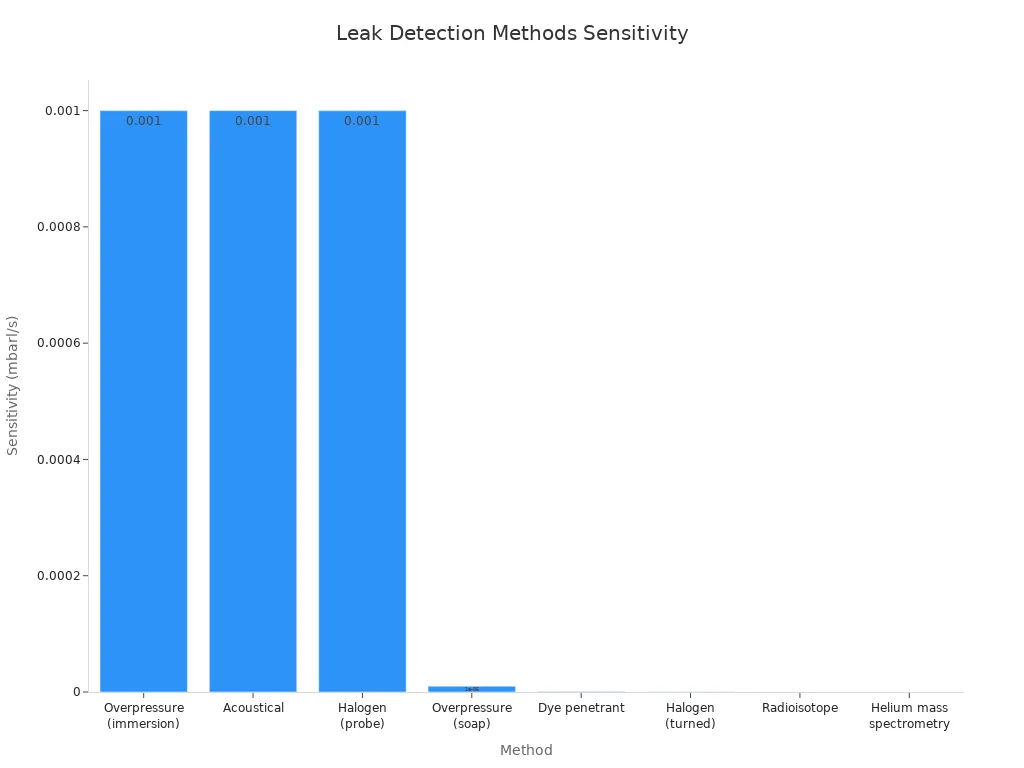
Leaks at valve connections create serious safety hazards. Propellant gases can ignite near electrical sources. Product leaks waste expensive raw materials. You can detect leaks using several proven methods. The heated water bath method works well for filled products. You immerse finished dispensers in hot water and watch for escaping gas bubbles. This test also confirms the can withstands elevated temperatures. Statistical weight-loss checks measure product weight over time. A slow, steady drop indicates a hidden leak. Pressure decay analysis monitors internal pressure changes to identify slow leaks. Each method offers different sensitivity levels. The bubble test detects leaks up to 10^-3 mbarl/s when you immerse parts in water. Soap solutions improve detection to 10^-5 mbarl/s. Helium mass spectrometry provides the highest sensitivity at 10^-11 mbarl/s. That method requires specialized laboratory equipment. For daily checks, visual inspection and bubble testing work best. Save advanced methods for quarterly validation.
Nozzle and Pump Cleaning
Nozzles contact your product directly during every fill cycle. Residue builds up inside them throughout the shift. This residue contaminates the next product batch. It also changes fill volumes over time. The manufacturer's maintenance guide recommends daily cleaning of liquid nozzles. This practice prevents cross-contamination between different formulations. It also maintains consistent filling accuracy within 1 percent tolerance. You cannot achieve precise fills with dirty nozzles.
Use manufacturer-approved cleaning solutions to remove residue
Different products leave different types of residue. Some dissolve easily in water. Others require specific solvents. Always use cleaning solutions your machine manufacturer approves. Wrong cleaners damage seals, gaskets, and internal components. They may leave their own residue behind. Check your Wejing Intelligent Equipment manual for recommended products. Apply the solution carefully to all product-contact surfaces. Let it sit briefly to dissolve stubborn residue. Then rinse thoroughly with clean solution or water.
Disassemble and soak nozzle clusters safely
Some residue requires deeper treatment than surface wiping. Disassemble nozzle clusters for thorough cleaning when needed. Follow the manual steps exactly during disassembly. Note the position of each part before removal. Take photos with your phone if necessary. Place parts in a container with approved cleaning solution. Ensure full submersion for complete coverage. Allow sufficient soak time based on residue severity. Then rinse each part individually with clean solution. Dry all parts completely before reassembly. Proper reassembly prevents leaks and alignment issues. Double-check that you installed every part correctly.
Air Pressure and Lubricant Level Checks
Your machine relies heavily on compressed air. Pneumatic systems drive filling heads, valves, and indexing mechanisms. Incorrect pressure causes inconsistent operation. Low lubricant levels cause premature wear on moving parts. Check both systems at the start of every shift.
Inspect air filters and regulator settings
Air filters remove moisture and debris from compressed air lines. Dirty filters restrict airflow to critical components. They also allow contaminants to pass through into the system. Check filter bowls for water accumulation each day. Drain collected water before it reaches the filter element. Inspect filter elements for visible dirt buildup. Replace clogged elements promptly to maintain proper flow. Verify regulator settings match your machine specifications. Note the recommended pressure range in your manual. Adjust the regulator if the gauge reading falls outside that range.
Top off pneumatic lubricators with compatible oil
Pneumatic lubricators add a fine oil mist to compressed air. This oil lubricates internal moving parts inside cylinders and valves. Running without oil causes rapid wear and premature failure. Check the lubricator oil level at the start of each shift. Refill when the level drops below the minimum indicator mark. Use only oil that your manufacturer specifies for your machine. Wrong oil viscosity can damage sensitive pneumatic components. Set the drip rate according to the manual recommendations. Too much oil contaminates downstream components. Too little oil leaves parts unprotected against friction.
These daily tasks form the foundation of proper filling machine maintenance. They prevent major issues before they start. Product contamination stops before it spreads to other batches. Blockages never get a chance to form inside nozzles. Your machine runs smoother with regular inspections. Your product quality stays consistent shift after shift. Your production schedule stays on track without unexpected stops.
Remember that routine maintenance procedures extend equipment life significantly. A weekly inspection adds another layer of protection beyond daily checks. Look for wear patterns that develop over several shifts. Listen for unusual sounds during operation. Feel for excessive vibration on machine frames. These observations help you catch problems early. Deep cleaning sessions go beyond daily tasks. Schedule them weekly or biweekly depending on production volume. Remove guards and access panels for thorough cleaning. Reach areas that daily routines miss. Inspect internal components for hidden wear. These deep cleaning sessions reveal developing issues before they cause failures. They also keep your machine operating at peak efficiency.
Always refer to your Wejing Intelligent Equipment manual for model-specific steps. Each machine has unique requirements based on its configuration. Follow the recommended schedule for your specific model. Document every cleaning session in a logbook. Track what you find during each inspection. This record helps you spot patterns and adjust your approach over time.
Your daily cleaning routine protects your investment. It ensures consistent output quality. It prevents costly emergency repairs. Make these tasks non-negotiable parts of every shift. Your machine will reward you with reliable, efficient performance for years to come.
Scheduled Filling Machine Maintenance Tasks
Daily cleaning keeps your machine running, but scheduled tasks keep it running well over the long term. These periodic routines go beyond simple cleaning. They protect internal components that wear down during normal operation. Your Wejing Intelligent Equipment manual includes a recommended maintenance schedule for your specific model. Follow that schedule faithfully. It exists because your machine's components have predictable lifecycles. You can extend those lifecycles with proper care.
Lubrication of Moving Parts
Every moving part in your aerosol filling machine needs proper lubrication. Bearings, chains, and cam followers create friction as they work. Friction generates heat, wears down surfaces, and eventually causes failure. You prevent this damage with consistent lubrication. The guide below shows recommended lubrication intervals for manual applications.
Manual lubrication: Apply grease at least once each day. You may extend this interval only if your experience shows longer periods work well for your specific application.
Oil bath or oil stream systems: Check the oil level at least daily. Change the oil after the first 50 operating hours. After that, change it every 500 operating hours.
Slinger disk systems: Inspect the oil level daily and maintain it within the recommended range.
Bearings, chains, and cam followers
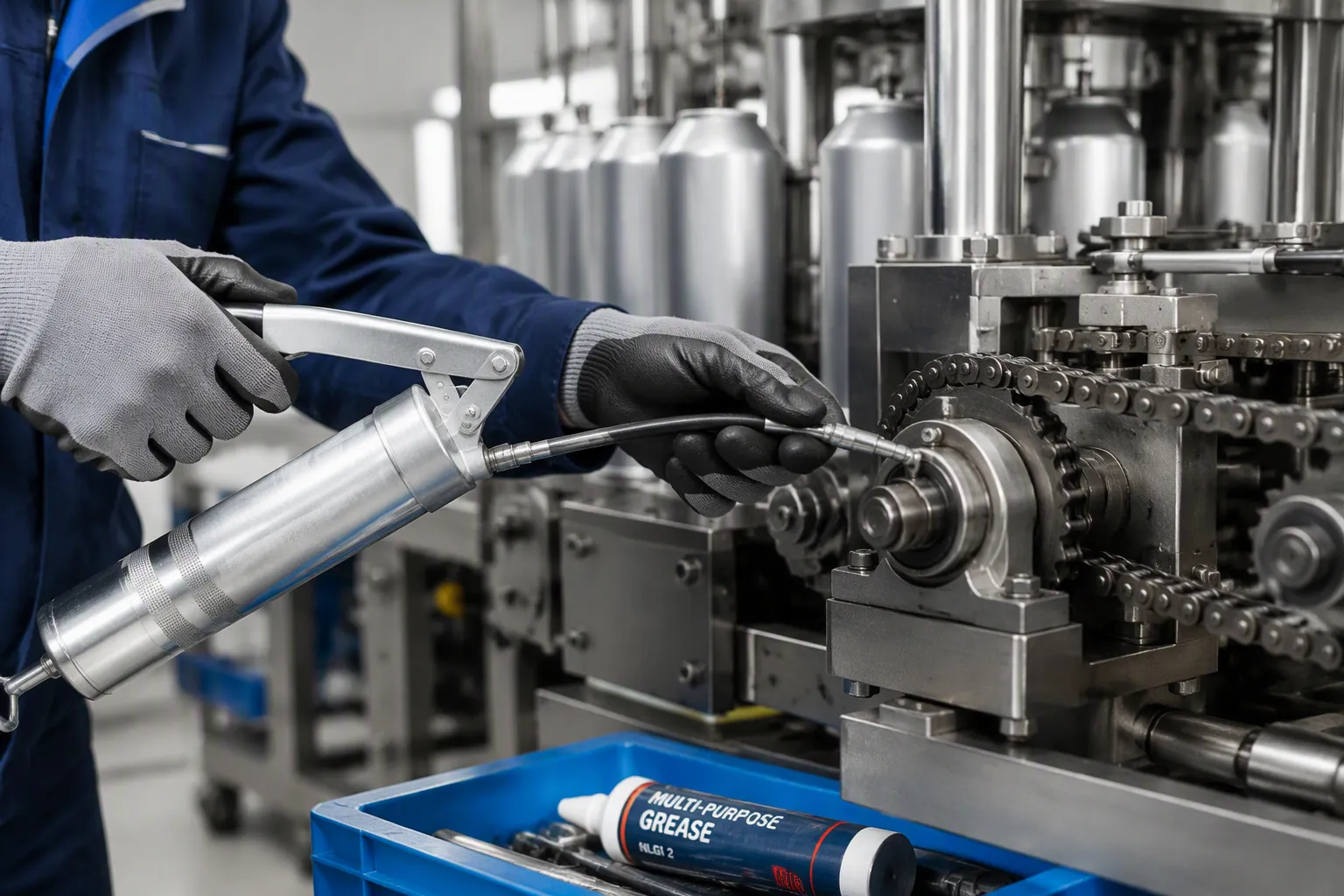
Bearings carry heavy loads during every fill cycle. They rotate thousands of times per shift. Without fresh grease, they overheat and seize. Chains transfer power between moving parts. They stretch and wear without proper lubrication. Cam followers guide precise movements. They need clean grease to operate smoothly. Apply grease to each of these components according to your manual's diagram. Wipe away old grease before applying new grease. This prevents dirt particles from becoming trapped in fresh lubricant.
Using OEM-specified grease for optimal performance
Your filling machine maintenance routine must use the right grease. Your original equipment manufacturer (OEM) specifies a particular grease type and viscosity. That specification matches your machine's operating temperature and speed. Wrong grease can break down quickly under heat. It may also react with seals and gaskets. Follow the OEM specification exactly. Check the grease container label before each application. Confirm you are using the correct product. This small step prevents major component failure.
Calibration for Consistent Fills
Calibration ensures your machine fills every can with the correct amount. Over time, sensors drift and components wear. Fill volumes become inconsistent. Your customers receive underfilled or overfilled products. Both problems cost you money. Regular calibration prevents these issues.
Proper testing and calibration are as important as machine selection. Incorrect calibration or parameter settings can significantly impact results. You cannot achieve filling accuracy by guesswork. You must verify your machine's performance against known standards.
Modern aerosol filling machines offer built-in calibration support. Your Wejing system includes these integrated controls:
Real-time monitoring: Pressure sensors and flow meters continuously send data to the PLC control system.
Automatic correction: If fill weight drifts beyond a 0.2% threshold, the machine automatically adjusts nozzle timing or piston travel distance within approximately 0.5 seconds.
Closed-loop feedback: The system cross-checks propellant amount and actual product weight. This compensates for material expansion from temperature changes during butane or propane filling.
Predictive maintenance alerts: The monitoring system detects worn nozzles or failing seals before they affect accuracy. It triggers maintenance alerts rather than waiting for breakdowns.
These integrated controls reduce fill inconsistencies to 0.5% or better. They decrease product waste by 18–22% compared to systems without such controls.
Test fill weights with a certified scale
Your preventive maintenance plan should include regular weight testing. Use a certified scale for all fill weight checks. Place a filled can on the scale and record the weight. Compare it to your target fill weight. Test multiple cans from different fill heads. Record the results in your maintenance log. Most applications benefit from weekly verification with monthly calibration procedures. High-precision pharmaceutical or analytical applications may require daily verification. Less critical industrial processes might use monthly intervals. Use statistical process control data to optimize your calibration schedule. Base your frequency on actual performance trends rather than arbitrary timeframes.
Component
Calibration Interval
Accuracy/Repeatability Specification
Load cells
Monthly
±0.02% accuracy
Flow meters
Quarterly
±0.5% repeatability
Pressure transducers
Bi-annual
±1% full scale
Production volumes exceeding 10,000 units per shift may require more frequent calibration intervals than those listed above.
Adjust sensors and pressure switches for accuracy
Sensors and pressure switches control critical machine functions. They trigger fill cycles, verify can presence, and monitor system pressure. Their accuracy directly affects product quality. Test each sensor according to your manual's procedure. Compare readings to known reference values. Adjust any sensor that falls outside specification. Pressure switches often have adjustment screws or digital settings. Set them to the exact values in your documentation. Document every calibration adjustment you make.
Weight control in aerosol filling is significantly impacted by formulation properties. Viscosity, volatility, and pressure behavior all affect how product flows. Your calibration must account for these variables. Formulation adjustments must go hand-in-hand with mechanical calibration and testing of valves and actuators. Only then can you achieve consistent fill weights.
Replacement of Worn Seals and Filters
All seals and filters eventually wear out. You cannot prevent this deterioration. You can plan for it. Scheduled replacement beats emergency failure. Prompt parts replacement keeps your machine running efficiently. Waiting for failure causes downtime, product waste, and potential safety hazards.
O-rings, gaskets, and propellant filters
O-rings create seals between moving components. They compress and relax thousands of times. Eventually they crack, harden, or lose their shape. Gaskets seal stationary connections. They degrade from chemical exposure and temperature cycling. Propellant filters remove contaminants from the gas supply. They clog with debris over time. Each of these parts has a limited service life.
Base replacement frequency on operating hours
Your maintenance schedule should track operating hours for each critical part. Identify how many hours each seal and filter is rated for. This information appears in your user manual. Replace parts when they reach their rated hour count. Do not wait for visible failure signs. By then, damage has already occurred. Minor leaks can affect other components. Clogged filters strain pumps and valves. Track operating hours with your machine's hour meter or your maintenance logs. Order replacement parts before you need them. This ensures prompt parts replacement when the scheduled time arrives.
Combine regular seal replacement with valve cleaning and systematic calibration verification. This prevents gradual accuracy degradation from internal leakage or improper valve seating. Your scheduled filling machine maintenance protects your investment and keeps your production line profitable.
Advanced Preventative Maintenance Strategies
Daily cleaning and scheduled servicing keep your machine running. Advanced strategies take your filling machine maintenance further. These proactive approaches use data and documentation to catch problems before they start. You shift from reacting to failures to preventing them entirely. This mindset reduces long-term costs and extends your equipment's working life.
Predictive Maintenance with Vibration Analysis
Vibration analysis detects hidden problems that visual checks miss. Every rotating part produces a unique vibration signature. Bearings, motors, and gearboxes each generate specific patterns. When components wear, those patterns change. You can measure these changes with sensors mounted on your machine.
Early detection of bearing wear and misalignment
Vibration analysis reveals sub-surface fatigue in bearings. It also identifies misalignment, bent shafts, and unbalanced components. These defects remain invisible to traditional inspection methods. You receive advanced warning before mechanical failure occurs. Studies show that 73% of filling machine failures are detectable 2–6 weeks in advance using AI sensors and vibration analysis. This lead time transforms your maintenance approach. You schedule repairs during planned downtime instead of emergency stoppages.
Setting baseline vibration thresholds
You must establish normal vibration levels for your machine first. Measure vibration across all operating speeds. Record these baseline readings in your maintenance system. Set alert thresholds slightly above normal operating ranges. When vibration exceeds those thresholds, the system notifies you. The economic benefit proves substantial. The U.S. Department of Energy's Federal Energy Management Program found that a properly functioning predictive maintenance program provides savings of 30–40% over reactive maintenance. It also delivers 8–12% savings over preventative maintenance alone.
Benefit Category
Quantitative Evidence
Downtime Reduction
Intervention before failure reduces downtime to near-zero compared to 4–12 hours for reactive maintenance
Detection Lead Time
73% of failures detectable 2–6 weeks in advance
Cost Savings
Unplanned downtime costs $5,000–$50,000 per hour; predictive maintenance delivers 4–8× ROI
Maintenance Planning
Spare parts inventory optimized to achieve 20–35% reduction
Detailed Maintenance Logbook
Your maintenance logbook serves as your machine's medical record. Every inspection, repair, and part replacement belongs in this document. You cannot improve what you do not measure. A complete log reveals patterns that individual observations miss.
Record daily tasks, repairs, and part changes
Document every action you take on your aerosol filling machine. Note the date, time, and operating hours. Record which parts you replaced and why. Write down any unusual sounds or behaviors you observed. Include fill weight measurements from your calibration checks. This documentation creates a complete history of your machine's condition.
Use logs to spot recurring issues and adjust schedules
A real-world case demonstrates the power of good records. A line manager tracked fill weight data in a simple spreadsheet. He noticed a consistent 1.5% creep every two weeks. This pattern traced back to a seal swelling from minor solvent exposure. The fix required a $12 o-ring replacement. Had the drift gone undetected for three months, the degradation would have escalated into a full pump rebuild. Your logbook enables this same early detection.
Maintenance guidance: Keep a fill-weight log to catch slow drifts caused by seal degradation before they become leaks. A slow decline in fill weight points to pump seal wear, while a sudden jump indicates a setting change or propellant line blockage. This practice directly supports reliability by enabling intervention at the first sign of component wear.
Operator Training and OEM Support
Your operators interact with the machine every day. They notice small changes before anyone else. Proper operator training turns them into your first line of defense. You cannot rely on maintenance staff alone to catch every issue.
Train staff on startup, shutdown, and emergency stops
Operator training must cover correct startup and shutdown sequences. These procedures protect both equipment and personnel. Your staff also needs thorough instruction on emergency stop systems. They must know when and how to trigger automatic shutdown for critical situations. Training should include gas detection monitoring and response protocols. Operators need to understand ventilation requirements for hazardous areas. They should also learn proper use of personal protective equipment. Regular calibration training ensures operators maintain accuracy during filling. Setup awareness prevents inefficiencies and defects before they occur.
Leverage expert support from Wejing for complex troubleshooting
Some problems exceed your team's expertise. You need a partner who understands your machine completely. Wejing Intelligent Equipment provides professional technical consulting and after-sales support. Their team responds within 12 hours with a solution. Spare parts ship in 5–7 days when in stock. They offer operation manuals and video demonstrations with every machine. Wejing also provides installation guidance and operator training programs. Their preventive maintenance support includes sample filling tests and container compatibility checks. These services preempt failures before your production runs begin. Contact Wejing for custom training programs and machine-specific technical documentation.
Your aerosol filling machine deserves consistent care. Daily cleaning routines prevent contamination and blockages. Scheduled servicing protects internal components through lubrication and calibration. Advanced strategies like vibration analysis and detailed logs catch problems early. Together, these maintenance tips form a complete protection system.
Apply these practices consistently. You will achieve optimal performance, minimize downtime, and maximize production efficiency. Your equipment gains long-term reliability. Your operation runs with greater efficiency and reliability every shift.
Audit your current maintenance approach today. Implement at least one new routine immediately. Contact Wejing Intelligent Equipment for professional guidance or a machine-specific maintenance plan. Your commitment to maintenance determines your success.
FAQ
How often should I clean the filling nozzles?
Clean liquid nozzles every day. Product residue builds up fast and can ruin the next batch. Your Wejing manual tells you the exact way to clean them. Follow that schedule every time. Missing one day can cause problems that take hours to fix later.
What happens if I skip daily leak inspections?
Small leaks turn into big failures. Propellant leaks can cause fires near electrical equipment. Product leaks waste costly materials. A quick five-minute check each morning helps you avoid expensive emergency fixes and keeps your workers safe from harmful exposure.
Why does my fill weight drift during long production runs?
Seals swell from contact with chemicals. Sensors change as they get hot. Your machine's closed-loop system fixes small changes on its own. Bigger drift means parts are wearing out. Look at your calibration log and check seals when you see steady weight changes over 0.5 percent.
Can I use any grease for my machine's moving parts?
No. Your OEM says which grease type and thickness to use. Wrong grease breaks down from heat and harms seals. Check the container label before each use. Using the right product stops early bearing failure and keeps your machine working well.
How do I know when to replace seals and filters?
Keep track of how many hours each part runs. Your user manual lists how long every seal and filter should last. Replace parts when they hit that hour count. Do not wait until you see them fail. Order new parts ahead of time so they are ready when you need them.
What should I record in my maintenance logbook?
Write down every check, fix, and part swap. Note the date, running hours, and any strange noises. Record fill weight numbers from calibration checks. These notes show patterns that help you spot problems before they start and let you adjust your maintenance plan.
When should I contact Wejing for technical support?
Contact Wejing when problems are too hard for your team to solve. Their experts reply within 12 hours with answers. They offer setup help, operator training, and guides for your specific machine. For hard troubleshooting or custom training, reach them through their website or email.