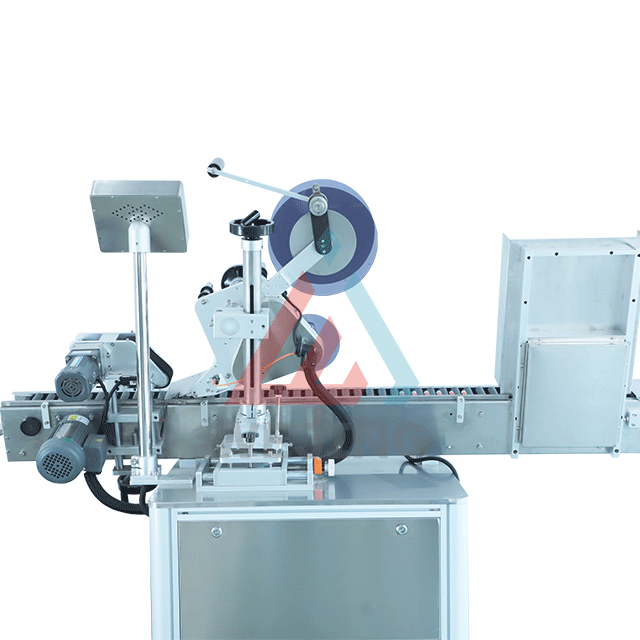
Have you ever wondered how to choose a suitable labeling machine? Labels, as an important part of the packaging, carry multiple functions such as product identification, information transmission, instructions for use, brand promotion, anti-counterfeiting, and traceability. Therefore, labeling has become an indispensable step in the packaging operation process. So, how to achieve high-quality product labeling? There is no doubt that choosing a suitable labeling machine is the key.
This blog aims to comprehensively analyze the factors that affect the selection of labeling machines, helping you to sort out your thoughts and make wise decisions in the complex options.
Determine your labeling needs
The first step in choosing a labeling machine is to clarify your labeling needs. This needs to be considered from the following aspects:
Product type
First, what type of product do you need to label? Different products have different requirements for labeling machines. Common product packaging includes bottles, cans, bags, boxes, hoses, etc. Which category does your product belong to? Is there a special shape or material? This will affect the selection of the labeling machine.
| Product type | Features |
| Bottle | Cylindrical, smooth surface |
| Can | Cylindrical, metal material |
| Bag | Soft, irregular shape |
| Box | Polyhedron, cardboard material |
| Hose | Soft, irregular shape |
Product size and shape
Secondly, the size and shape of the product are also important considerations. The size of the product determines the size of the label, and the irregularity of the shape has high requirements for the adaptability of the labeling machine. You need to measure the specific size of the product, evaluate the complexity of the shape, and choose a compatible label machine.
Packaging material
Again, the material of the product packaging cannot be ignored. Common materials include glass, plastic, metal, cardboard, etc. Different materials have different requirements for the adhesion of labels, and the applicable label types are also different. You need to fully consider the product material factor when selecting the label machine to ensure a good labeling effect.
| Packaging material | Features | Adhesion requirements | Applicable label types | Special considerations |
| Glass | Smooth, hard, transparent | High | Pressure-sensitive labels, heat shrink sleeves | Water resistance and temperature resistance need to be considered |
| Plastic | Lightweight and versatile | Medium | Pressure-sensitive labels, heat shrink sleeves, in-mold labels | Surface treatment may be required |
| Metal | Strong and good thermal conductivity | High | Pressure-sensitive labels, die-cut stacking labels | Corrosion resistance needs to be considered |
| Cardboard | Lightweight, recyclable | Low to medium | Pressure-sensitive labels, direct printing | Water absorption and abrasion resistance need to be considered |
Specific label types
Then, you need to clarify the specific label requirements. Different types of labels have different requirements for labeling machines. Please list the types of labels required for your product, which will provide a direct basis for the selection of labeling machines.
| Classification Dimensions | Label Type |
| Purpose | Brand label, instruction label, information label, grade label, etc. |
| Labeling Method | Pressure-sensitive label, heat shrink sleeve label, die-cut stacking label, in-mold label, etc. |
| Position | Wrap-around label, front and back label, top and bottom label, etc. |
Labeling Speed and Batch Requirements
Finally, you need to evaluate the speed and batch requirements of labeling. This is related to whether you should choose a semi-automatic or fully automatic labeling machine. Generally speaking, semi-automatic equipment is more economical and flexible for small-batch, multi-variety production; while large-batch, single-variety production is suitable for fully automatic labeling machines. You need to calculate the daily production demand, weigh production efficiency and cost, and select the best solution.
Workshop space
| Type | Features | Applicable scenarios | Advantages | Disadvantages |
| Desktop | Small size, portable | Small batch production, laboratory use | Small footprint, high flexibility | Low production efficiency |
| Stand-alone | Independent operation, complete functions | Medium and large batch production | High production efficiency, good stability | Large footprint, inconvenient to move |
| Modular | Different modules can be combined according to needs | Multi-variety and multi-specification production | High flexibility, strong scalability | Initial cost may be high |
Key features of labeling machines
It is not enough to just determine your needs. It is not easy to choose a good labeling machine. It is easy to lose focus in the face of dazzling parameters and models. To help you establish an overall understanding of labeling machines, you should understand the following key features of labeling machines:
Precision and accuracy
Precision and accuracy are the primary characteristics of labeling machines. Problems such as skewed, misaligned, and repeated labels will directly affect the aesthetics of the product and even cause functional defects. Therefore, a high-quality labeling machine must have advanced sensors and scanners to achieve precise control of the label position. When selecting equipment, you should pay more attention to relevant technical indicators.
Flexibility and compatibility
At the same time, flexibility and compatibility are equally important. Given that the diversification of products has become an inevitable trend, labeling machines must also keep up with this pace. Humanized design provides support for the flexible production of production lines, such as Quick change design, adjustable label reserve length, and modular production units. In addition, the compatibility of label materials is also a big test. The equipment needs to calmly deal with various materials such as self-adhesive, thermal paper, PET, OPP, shrink film, etc.
Stability and reliability
Stability and reliability are directly related to production efficiency. Label machines usually need to work continuously for a long time. Failure not only means downtime losses, but is more likely to cause product scrapping. Ensuring the consistent stability of the equipment requires the use of high-quality components, scientific design and strict control of manufacturing processes. In addition, considerate after-sales service is also an important guarantee for equipment reliability.
Ease of operation
Finally, the ease of operation cannot be ignored. No matter how advanced the equipment is, if the operation is cumbersome, it will greatly reduce work efficiency. Humanized design such as humanized operation interface, clear button layout and intuitive status display will affect the convenience of operation. At the same time, daily maintenance of the label machine is also very important. The equipment should adopt maintenance-free design, low-maintenance design, automatic cleaning head and quick replacement of consumables as much as possible.
Factors to consider when buying a labeling machine
After clarifying your labeling needs, let's take a look at what specific parameters you need to pay attention to when choosing a labeling machine:
Label compatibility
The first is label compatibility. There are many different label materials, sizes, and shapes on the market. Does your favorite labeling machine support these properties? Does the label size match the label roll diameter of the machine? Is it friendly to special materials such as self-adhesive and thermal paper? These questions need to be clarified before purchasing.
Labeling speed
The second is labeling speed. We all hope that the labeling machine is as fast as possible, but configurations that exceed actual needs will cause unnecessary waste. You should evaluate the requirements for labeling speed based on your own production situation and choose a model that matches the production capacity scale.
Product compatibility
The third is product compatibility. As we mentioned earlier, the size and shape of the product are important bases for choosing a labeling machine. But when actually purchasing, you need to further confirm the machine's labeling ability for specific products. Cylindrical bottles, conical cups, polyhedral boxes...different shapes have different requirements for direction and angle when labeling. Some labeling machines also support fast switching of multiple products, which will be a big advantage if you have a rich product line.
Labeling method
The fourth is the labeling method. Common labeling methods are pressure-sensitive and heat-shrink sleeve labeling. Pressure-sensitive labeling is suitable for flat and regular packaging, while curved and irregular products are suitable for heat-shrink sleeve labeling. Heat-shrink sleeve labeling also has unique advantages such as waterproof, dustproof, and tear-proof. Please choose a labeling method that matches the product according to its shape characteristics and use environment.
Integration of production lines
The fifth is integration with the production line. If your labeling machine needs to be integrated into an existing packaging production line, the compatibility of the equipment is crucial. You need to fully understand the labeling machine's feeding method, labeling direction, external dimensions, electrical interface and other parameters to ensure that it can be seamlessly embedded in the existing production process. Do a good job of on-site investigation and technical docking in advance to avoid later troubles.
Possibility of customization
Finally, there is the possibility of customization. Sometimes the particularity of the product will bring unique labeling requirements, and at this time, the label machine manufacturer needs to provide personalized customization services. For example, special-shaped labeling, multi-label labeling, sleeve labeling + inkjet printing, etc. The strength of customization ability also reflects the technical strength of the manufacturer from the side. Customization is not limited to the label machine itself, and the upgrade and transformation of intelligence and informatization are also worthy of attention.
Choose the right labeling machine
The labeling position, the degree of automation of the labeling machine, and whether to choose a pneumatic or electric labeling machine are also factors that need to be considered when choosing a labeling machine.
Labeling position
The labeling position of the labeling machine is varied, mainly including wraparound, top, front and back, top and bottom. Wraparound labeling is suitable for cylindrical or oval packaging. The label surrounds the container and the information is displayed completely; top labeling is pasted on the top surface of the bottle cap, box lid, etc., which is convenient for consumers to quickly identify; front and back labeling is pasted on the front and back of the package respectively, with more information; top and bottom labeling can be labeled on the top and bottom of the package at the same time, which is common in anti-counterfeiting or promotional scenarios. For products of different shapes and sizes, there are a variety of corresponding labeling machines available on the market.
| Labeling position | Applicable packaging type | Application scenario |
| Wraparound | Cylindrical or oval packaging | Bottled beverages, canned food, etc. |
| Top | Packaging with a flat top surface | Products that need to be quickly identified, such as cosmetics, medicines, etc. |
| Front and back | Packaging of various shapes | Products that need to display a lot of information, such as food, medicine, etc. |
| Top and bottom | Packaging of various shapes | Anti-counterfeiting or promotional scenarios, such as luxury goods, limited edition products, etc. |
Automation of labeling machine
In addition to the labeling position, the automation of the labeling machine is also an important selection dimension. Manual labeling relies on manual work, which is low-cost but limited in efficiency; semi-automatic labeling is done by manual feeding, and the machine automatically absorbs and sticks the label, taking into account flexibility and efficiency; fully automated labeling can realize the automation of the entire process from feeding to labeling, with high production efficiency, but high cost. You need to weigh the input-output ratio of labor and equipment according to the batch size of labeling and choose the best solution.
| Degree of automation | Mode of operation | Advantages | Disadvantages | Applicable scenarios |
| Manual | Complete the whole process manually | Low cost, high flexibility | Limited efficiency, high labor intensity | Small batch, multi-variety production |
| Semi-automatic | Manual feeding, machine labeling | Balance flexibility and efficiency | Still need manual participation | Medium batch production |
| Fully automatic | Full process automation | High production efficiency, good stability | High cost, low flexibility | Large batch, single variety production |
Pneumatic vs electric
Common types of label machines are divided into pneumatic and electric. Pneumatic label machines are powered by compressed air, with a simple structure and easy maintenance, but with high noise; motor-driven electric label machines have better performance and low noise, but are relatively expensive. The two drive methods have their own advantages in practical applications. You can choose according to factors such as acoustic environment requirements and energy consumption levels.
| Features | Pneumatic label machine | Electric label machine |
| Power source | Compressed air | Motor |
| Structure | Simple | Relatively complex |
| Maintenance | Convenient | Relatively complex |
| Noise level | Large | Low |
| Performance | General | Excellent |
| Cost | Relatively low | Relatively high |
| Applicable scenarios | Environments with low noise requirements | Environments with high requirements for performance and noise control |
Budget and ROI
When choosing a labeling machine, you should not only look at the present, but also look to the future. The ROI of a labeling machine depends on the cost-effectiveness and usage time of the equipment. With a limited budget, you need to balance the advancement and economy of the labeling machine, not only to meet the current production needs, but also to leave room for future business development.
From a long-term perspective, the investment cost of the equipment is actually just the tip of the iceberg. Maintenance costs, parts loss, energy consumption, etc. are the main factors affecting the economic benefits of the equipment. High-quality labeling machines fully consider the maintainability of the equipment at the beginning of the design. From the structural layout to the material selection, they strive to be simple and durable to minimize maintenance costs.
At the same time, the potential of labeling machines in speeding up and increasing efficiency should not be underestimated. Automated labeling machines can label hundreds of products per minute, which can save a lot of manpower compared to manual labeling. If the product batch is large and the unit price is high, the investment payback period of the equipment is expected to be further shortened. Taking into account factors such as product profit margin, labeling efficiency, and labor costs, you can calculate the ROI of the labeling machine, speak with data, and make rational decisions.
Conclusion
Choosing a labeling machine is a systematic project that requires a comprehensive assessment of product requirements, understanding of equipment features, and weighing cost-effectiveness. This guide has sorted out the key factors, but the market is complex and changing, and you may still have questions. At this time, professional advice is crucial.
We sincerely recommend that you contact Weijing for consultation on labeling machine purchase. As an industry-leading supplier, Weijing has rich experience and expertise to provide you with the most suitable labeling machine solution.


