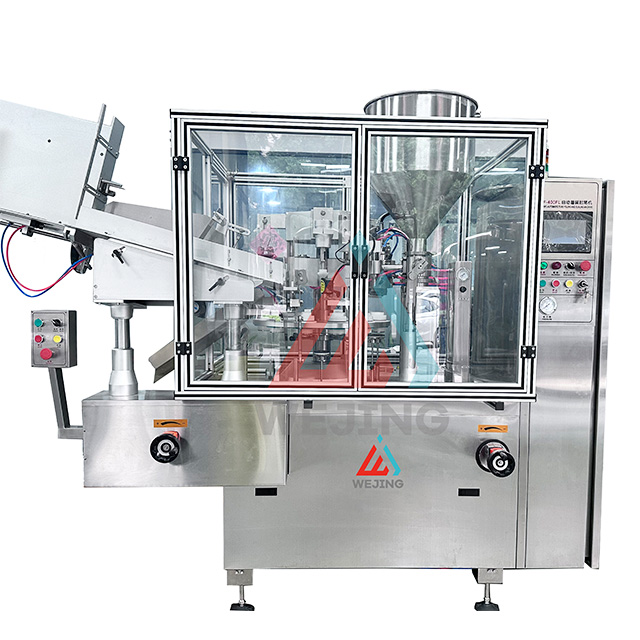
Are you navigating the complex landscape of tube filling technology for your production needs? Modern tube filling machines represent a critical investment that directly impacts manufacturing efficiency, product quality, and operational costs. Whether you're scaling up operations or upgrading existing equipment, understanding key factors like automated cleaning capabilities, safety features, and maintenance protocols ensures optimal performance and return on investment.
This guide examines key aspects from basic operating principles to advanced technical specifications, helping you select the optimal system for your specific requirements. We'll cover filling technologies, industry standards, and practical selection criteria, concluding with answers to common questions that arise during the procurement process.
What is a Tube Filling Machine?
A tube filling machine represents a specialized piece of automated equipment designed to precisely dispense and seal various products into tubes, revolutionizing the packaging process across multiple industries. These sophisticated systems have become indispensable in modern manufacturing, particularly in cosmetics, pharmaceuticals, food, and chemical sectors.
Understanding Automated Filling Systems and Components
The core architecture of a tube filling machine integrates several crucial components working in harmony:
Hopper SystemThe primary product reservoir employs advanced pressure control mechanisms to maintain consistent material flow. This system often incorporates level sensors and temperature controls to preserve product integrity throughout the filling process.
Filling MechanismPrecision-engineered nozzles and pumps work in concert to deliver exact product quantities. The filling mechanism typically utilizes either piston-based volumetric filling or sophisticated servo-driven systems, achieving accuracy rates up to ±0.5%.
Tube Handling SystemAutomated grippers and positioning mechanisms delicately manipulate empty tubes through multiple stations. The system employs optical sensors and mechanical guides to ensure proper tube orientation and stability throughout the filling cycle.
Types of Machines and Compatible Materials
Modern tube filling machines accommodate diverse product formulations and packaging requirements:
Hot Filling MachinesSpecially designed for materials requiring elevated temperatures during processing, these machines maintain product viscosity through integrated heating systems. Common applications include lip balms, hot-melt adhesives, and wax-based products.
Cold Filling MachinesOptimized for room-temperature products, these systems excel in handling creams, lotions, and gels. They often incorporate clean-room compatibility features for pharmaceutical and cosmetic applications.
Hybrid SystemsAdvanced machines combining multiple filling technologies can process various product consistencies, from water-like liquids to high-viscosity pastes, offering manufacturing flexibility.
Key Features and Capabilities
Production SpeedIndustrial-grade machines achieve output rates ranging from 30 to 200 tubes per minute, utilizing servo-driven mechanics and sophisticated control systems to maintain consistent performance.
Cleaning ProtocolsClean-in-Place (CIP) and Sterilization-in-Place (SIP) capabilities enable thorough sanitization without extensive disassembly. These systems typically feature pharmaceutical-grade stainless steel construction and FDA-compliant contact surfaces.
Quality Control IntegrationModern machines incorporate vision systems and weight verification modules to ensure filling accuracy. Advanced models feature real-time monitoring capabilities, detecting and rejecting non-compliant tubes while maintaining production flow.
Automation LevelFully automated systems handle everything from tube loading to final packaging, while semi-automatic options offer cost-effective solutions for smaller production runs. PLC controls and touch-screen interfaces enable precise parameter adjustments and production monitoring.
Material CompatibilityEnhanced material handling capabilities accommodate various tube materials, including:
Plastic laminates
Aluminum tubes
Co-extruded tubes
How Does the Tube Filling Process Work?
The tube filling process encompasses a sophisticated sequence of automated operations, each precisely controlled to ensure consistent product delivery and packaging integrity. Modern tube filling systems employ advanced mechatronic principles to coordinate multiple subsystems, creating a seamless production flow.
Step-by-Step Operation Breakdown
Tube Loading and PositioningEmpty tubes enter the system through automated feeding mechanisms, where optical sensors verify proper orientation. Precision grippers then transport each tube to the filling station, maintaining strict positional accuracy through servo-controlled movements.
Product PreparationThe filling material undergoes preliminary conditioning in the holding tank, where parameters such as temperature, pressure, and viscosity are continuously monitored and adjusted. Advanced systems may incorporate mixing elements to maintain product homogeneity.
Filling OperationPrecise volumetric dispensing occurs as the filling nozzle descends into the tube. The process employs either time-pressure systems or positive displacement pumps, achieving fill accuracies within ±1%. Sophisticated machines adjust filling speeds based on product characteristics to prevent air entrapment.
Sealing ProcessFollowing product dispensing, tubes advance to the sealing station where specialized heat-sealing dies create hermetic seals. The sealing parameters - temperature, pressure, and dwell time - are automatically adjusted based on tube material specifications.
Material Flow and Control Systems
The material flow system forms the critical pathway from bulk storage to individual tubes through meticulously engineered channels. Advanced pumping mechanisms maintain precise pressure gradients, while integrated flow meters provide constant feedback, ensuring consistent product delivery regardless of viscosity variations.
The control architecture operates through a sophisticated PLC system, processing thousands of data points per second. This digital brain continuously monitors critical parameters including flow rates, temperatures, and pressure levels, making real-time adjustments to maintain optimal performance through adaptive algorithms.
Clean-in-Place (CIP) protocols maintain hygiene standards through automated cleaning sequences. The system employs strategically positioned spray nozzles and specialized detergent cycles, while conductivity sensors verify cleaning effectiveness. This automated approach significantly reduces production downtime while ensuring consistent sanitation standards.
Environmental control systems protect product integrity throughout the filling process. Temperature-controlled zones prevent viscosity fluctuations, while humidity management systems safeguard moisture-sensitive materials. For specialized products, automated gas blanketing systems maintain precise atmospheric conditions during filling operations.
Quality Verification Methods
The dynamic weighing system operates continuously during production, employing high-precision load cells to monitor fill accuracy. Each tube passes through calibrated checkpoints where statistical process control algorithms instantly identify and reject products falling outside specified parameters.
Advanced vision inspection technology scrutinizes each tube through high-resolution cameras and specialized lighting systems. The image processing software examines critical quality attributes such as seal integrity, fill levels, and label placement, detecting subtle defects at production speeds.
Authentication systems safeguard product integrity through multiple verification layers. Each tube receives unique serialization codes, while UV markers and RFID tracking provide additional security measures. This multi-layered approach ensures complete traceability throughout the supply chain.
The automated documentation system captures and analyzes production data in real-time. Critical metrics, including batch records, quality parameters, and deviation alerts, flow into a centralized database. This digital infrastructure enables immediate response to quality variations while maintaining regulatory compliance.
What Are the Different Types of Filling Technologies?
Tube filling technologies have evolved to accommodate diverse production requirements, product characteristics, and manufacturing scales. Each technology offers distinct advantages for specific applications, influencing both production efficiency and product quality.
Automatic vs. Semi-Automatic Systems
Fully Automatic Systems harness sophisticated robotics and integrated control systems to execute complete filling operations without human intervention. These systems achieve production speeds of 100-200 tubes per minute through synchronized servo motors and precision timing mechanisms. Advanced sensors continuously monitor every operation phase, while automated troubleshooting protocols minimize downtime.
Semi-Automatic Solutions combine manual tube loading with automated filling and sealing processes. These systems typically operate at 20-40 tubes per minute, offering flexibility for smaller production runs. Operators maintain control over critical parameters while benefiting from consistent filling accuracy and reduced physical strain.
Hot vs. Cold Filling Methods
Hot Fill Technology maintains product temperatures between 65°C and 95°C throughout the filling process. This method employs specialized heating elements and temperature-controlled product pathways to:
Preserve product viscosity for consistent flow
Eliminate microbial contamination
Enable proper solidification of wax-based products The system includes rapid cooling mechanisms to stabilize filled products before final packaging.
Cold Fill Systems operate at ambient or controlled room temperatures, specifically designed for heat-sensitive formulations. Advanced thermal management ensures product stability through:
Precise temperature monitoring
Climate-controlled filling chambers
Specialized nozzle designs preventing product degradation These systems excel in handling emulsions, creams, and temperature-sensitive pharmaceuticals.
Single-Head vs. Multi-Head Configurations
Single-Head Designs provide precise control over individual filling operations. The focused approach enables:
Real-time fill weight adjustment
Detailed quality monitoring per tube
Quick product changeover capability These systems typically integrate advanced clean-in-place features for efficient sanitation between production runs.
Multi-Head Configurations employ parallel filling stations to multiply production output. Modern systems feature:
Individual head calibration capabilities
Synchronized motion control
Independent quality verification per head The technology allows for simultaneous filling of different products or volumes, maximizing production flexibility while maintaining precision.
Hybrid Configurations combine multiple filling technologies within a single system. These advanced machines offer:
Adaptable filling speeds
Product-specific temperature control
Automated head selection based on product characteristics The versatility enables manufacturers to process diverse product lines without additional equipment investment.
What Technical Specifications Matter Most?
Speed and Capacity Requirements
Production Speed Metrics define machine throughput capabilities. Semi-automatic systems operate effectively at 30-60 tubes per minute, while high-speed automatic lines achieve 100-200 tubes per minute. The filling speed correlates directly with servo motor specifications and control system response times.
Buffer Capacity influences continuous operation efficiency. Integrated hopper systems maintaining 20-30 minutes of product supply minimize refill interruptions. Automated tube feeding mechanisms with 500-1000 tube storage capacity ensure sustained production flow.
Changeover Efficiency affects total production time. Quick-change components and tool-less adjustments reduce downtime between products. Modern systems achieve complete product changeovers within 15-30 minutes through automated cleaning cycles and digital recipe management.
Accuracy and Precision Standards
Fill Weight Control demonstrates machine precision capabilities. Advanced systems maintain accuracy within ±0.5% of target weight through dynamic feedback loops. Load cell technology providing 0.01g resolution ensures consistent product delivery across production runs.
Environmental Compensation maintains filling accuracy despite external variations. Temperature-compensated load cells adjust for thermal drift, while vibration isolation systems prevent measurement interference. Humidity monitoring systems protect moisture-sensitive products during processing.
Calibration Stability ensures long-term measurement reliability. Automated calibration verification occurs at programmed intervals, typically every 4-8 hours of operation. Digital calibration records maintain compliance documentation while minimizing manual intervention.
Cleaning and Maintenance Factors
CIP System Performance determines sanitation efficiency. High-pressure spray systems achieving 3-5 bar cleaning pressure ensure thorough residue removal. Automated cleaning cycles complete full system sanitization within 45-60 minutes using validated cleaning protocols.
Preventive Maintenance Schedules optimize machine reliability. Critical components undergo inspection every 500-1000 operating hours, while wear parts receive replacement at manufacturer-specified intervals. Digital maintenance tracking systems ensure timely service execution.
Spare Parts Accessibility minimizes potential downtime. Critical component redundancy and on-site spare parts inventory enable rapid repairs. Modular design philosophy allows component replacement without extensive system disassembly.
Safety and Compliance Features
Emergency Systems protect operators and equipment. Automated emergency stops respond within 100 milliseconds, while safety interlocks prevent access to moving components. Pressure relief systems protect against over-pressure events in product pathways.
Regulatory Compliance features meet international standards. Materials certification documentation verifies FDA compliance, while electrical systems meet IP65 protection standards. Automated data logging maintains electronic batch records for regulatory review.
Operator Protection mechanisms ensure workplace safety. Physical guards and light curtains prevent access to hazard zones, while ergonomic design features reduce operator strain. HMI interfaces position critical controls within safe reach while maintaining clear sight lines.
How to Choose the Right Machine for Your Needs?
Production Requirements Analysis
Output Volume Demands drive initial machine selection decisions. Production rates between 30-60 tubes per minute suggest semi-automatic systems, while requirements exceeding 100 tubes per minute necessitate fully automated solutions. Daily production targets directly influence machine configuration and investment scale.
Operational Hours impact machine durability requirements and maintenance scheduling. Continuous 24/7 operations demand robust construction with redundant systems, while single-shift production allows for standard-duty equipment configurations. The production schedule influences component specifications and backup system requirements.
Batch Size Flexibility determines the need for quick-change capabilities. Manufacturing environments handling multiple SKUs require rapid changeover features and automated cleaning systems, enabling efficient product transitions while maintaining quality standards.
Product and Material Considerations
Material Viscosity Range influences pump selection and filling system design. Products ranging from water-like liquids to thick pastes require specific nozzle configurations and pressure control systems. Advanced machines accommodate viscosity variations through automated parameter adjustment.
Temperature Sensitivity dictates environmental control requirements. Heat-sensitive formulations need precise temperature monitoring and cooling systems, while thermally stable products allow for simplified handling mechanisms. Product stability parameters guide the selection of filling and storage system specifications.
Container Compatibility affects tube handling mechanisms. Different tube materials - aluminum, plastic, laminate - require specific gripping pressures and sealing parameters. The machine's versatility in handling various tube specifications ensures long-term production flexibility.
Technical Specifications Evaluation
Accuracy Requirements guide precision control system selection. Fill weight variations within ±0.5% demand sophisticated weighing systems and feedback controls. Critical applications may require integrated vision systems for continuous quality verification.
Sanitation Standards influence machine construction materials and cleaning systems. Pharmaceutical-grade requirements necessitate 316L stainless steel construction and validated clean-in-place systems. Food-grade applications may permit alternative materials while maintaining strict hygiene protocols.
Control System Integration capabilities determine production monitoring options. Modern systems featuring IoT connectivity enable remote monitoring and predictive maintenance. Data logging requirements guide PLC selection and software interface specifications.
Cost-Benefit Assessment
Initial Investment Impact extends beyond purchase price considerations. Installation requirements, facility modifications, and operator training contribute to total implementation costs. Long-term value analysis includes productivity improvements and reduced labor requirements.
Operational Efficiency Metrics measure actual cost savings. Reduced product waste, decreased downtime, and improved quality consistency generate quantifiable benefits. Energy consumption and maintenance requirements factor into ongoing operational costs.
Return-on-Investment Timeline varies by production volume and efficiency gains. High-volume operations typically achieve ROI within 12-24 months through labor savings and increased throughput. Additional value derives from improved product quality and reduced compliance risks.
Hot vs. Cold Filling Methods
Hot Filling Equipment requires specialized heating and control systems. Temperature maintenance between 65°C-95°C demands efficient heat distribution and precise monitoring. Integrated cooling systems ensure proper product stabilization post-filling.
Cold Filling Systems focus on temperature stability at ambient conditions. Climate-controlled filling chambers protect temperature-sensitive formulations. Specialized nozzle designs prevent product degradation during the filling process.
Single-Head vs. Multi-Head Configurations
Single-Head Systems offer precise individual tube control. Real-time fill weight adjustments and detailed quality monitoring enhance accuracy. Quick changeover capabilities suit frequent product transitions.
Multi-Head Configurations maximize production throughput. Parallel filling stations with independent calibration enable simultaneous operation. Advanced synchronization systems maintain consistent quality across all filling heads.
Scalability Options allow for future capacity expansion. Modular designs permit additional filling head installation as production demands increase. Flexible configurations accommodate changing production requirements without complete system replacement.
Industry-Specific Applications and Standards
Pharmaceutical Requirements
GMP Compliance mandates stringent control over every aspect of the filling process. Pharmaceutical-grade machines incorporate 316L stainless steel construction, validated clean-in-place systems, and comprehensive documentation capabilities. Each production batch requires complete traceability and parameter verification.
Cross-Contamination Prevention necessitates sophisticated cleaning protocols. Automated cleaning validation systems ensure residual product removal between batches. Specialized seals and gaskets prevent product migration, while HEPA filtration maintains clean-room conditions.
Sterility Maintenance demands advanced aseptic filling capabilities. Machines feature integrated UV sterilization, HEPA-filtered air systems, and positive pressure environments. Critical filling zones maintain ISO 5 (Class 100) cleanliness standards throughout operation.
Cosmetic Industry Needs
Product Consistency Control ensures uniform filling of varied viscosity formulations. Advanced servo-driven pumps maintain precise flow rates for products ranging from liquid serums to thick creams. Temperature-controlled holding tanks preserve product integrity throughout production runs.
Aesthetic Quality Requirements necessitate careful tube handling. Specialized grippers prevent surface marring, while precise filling systems avoid product splashing. Vision inspection systems verify packaging appearance, detecting minor cosmetic defects.
Formula Protection systems safeguard sensitive ingredients. Temperature-controlled pathways prevent degradation, while oxygen-free filling protects against oxidation. UV-protected components preserve light-sensitive formulations during processing.
Food Industry Regulations
FDA Compliance shapes equipment design specifications. Food-grade materials, sanitary welding techniques, and easily cleanable surfaces meet regulatory requirements. Documented validation procedures ensure consistent compliance with food safety standards.
HACCP Integration requires systematic hazard control. Automated monitoring systems track critical control points, while data logging capabilities enable comprehensive audit trails. Real-time alerts notify operators of parameter deviations requiring immediate attention.
Allergen Management protocols prevent cross-contamination risks. Thorough cleaning validation between product runs eliminates allergen traces. Separate product pathways for allergen-containing formulations provide additional safety measures.
Quality Control Protocols
Real-Time Monitoring systems verify critical parameters continuously. High-precision sensors track fill weights, seal integrity, and environmental conditions. Advanced analytics detect subtle variations before they impact product quality.
Documentation Management ensures complete process traceability. Automated data collection systems record operational parameters, quality checks, and deviation alerts. Electronic batch records facilitate regulatory compliance and quality audits.
Validation Procedures maintain consistent production standards. Regular calibration protocols ensure measurement accuracy, while preventive maintenance schedules preserve equipment reliability. Performance qualification testing verifies continued compliance with quality requirements.
Conclusion
Ready to Choose Your Ideal Tube Filling Machine? Guangzhou Weijing Intelligent Equipment Co., Ltd. brings over two decades of expertise in cosmetic packaging automation. Our tube filling systems combine precision engineering with industry-leading features:
✓ Filling accuracy within ±0.5%
✓ Production speeds up to 200 tubes/minute
✓ GMP-compliant construction
✓ Advanced clean-in-place systems
✓ Comprehensive after-sales support
Contact Our Experts Today:
• Technical Consultation: Our engineers will analyze your specific requirements
• Custom Solutions: Tailored configurations for your production needs
• ROI Analysis: Detailed cost-benefit evaluation for your investment
Frequently Asked Questions (FAQs)
Q: What determines whether I need a cold or hot filling machine for my products?
Hot filling machines are essential for products requiring elevated temperatures (65-95°C) during processing, such as wax-based formulas. Cold filling suits temperature-sensitive products like emulsions and creams. The choice depends on your product's thermal stability requirements and preservation needs.
Q: How do I calculate the right production capacity for my tube filling needs?
Calculate your daily production volume, factor in 15-20% additional capacity for growth, and consider peak season demands. For example, if you need 20,000 tubes per day in an 8-hour shift, select a machine capable of 45-50 tubes per minute to accommodate variations.
Q: What fill accuracy standards should I expect from a modern tube filling machine?
Professional-grade machines achieve ±0.5% filling accuracy for most products. High-precision systems utilizing load cell technology and dynamic feedback control can maintain accuracy within ±0.2% for critical applications requiring strict weight control.
Q: How long should a typical product changeover take on a well-designed system?
Modern tube filling systems complete full product changeovers within 15-30 minutes, including cleaning cycles. Quick-change components, tool-less adjustments, and automated CIP systems significantly reduce transition times between different products.
Q: What are the key differences between pharmaceutical-grade and cosmetic-grade filling machines?
Pharmaceutical machines require 316L stainless steel construction, validated clean-in-place systems, and documented compliance with GMP standards. Cosmetic-grade equipment may utilize 304 stainless steel and simpler cleaning protocols while maintaining high aesthetic quality standards.
Q: How do I determine the right nozzle size for my product's viscosity?
Nozzle selection depends on product viscosity, desired fill speed, and accuracy requirements. Products below 5,000 cPs typically use 3-6mm nozzles, while high-viscosity products (>50,000 cPs) require 8-12mm nozzles for optimal flow control.
Q: What maintenance schedule should I follow to ensure optimal machine performance?
Implement daily cleaning protocols, weekly calibration checks, and monthly preventive maintenance inspections. Critical components require inspection every 500-1000 operating hours, with comprehensive service intervals based on manufacturer specifications and usage patterns.
Q: How can I ensure my filling machine maintains consistent accuracy throughout long production runs?
Implement automated weight checking at 15-30 minute intervals, utilize temperature-compensated load cells, and maintain stable environmental conditions. Regular calibration verification and dynamic feedback systems help maintain accuracy across extended production periods.
Q: What safety features should I prioritize when selecting a tube filling machine?
Essential safety features include emergency stop systems with <100ms response time, safety interlocks on access panels, light curtains around hazard zones, and pressure relief systems. Ensure compliance with current machinery safety standards and operator protection requirements.
Q: When should I consider upgrading from a semi-automatic to a fully automatic system?
Consider upgrading when daily production exceeds 10,000 tubes, labor costs increase significantly, or quality consistency becomes critical. Full automation typically becomes cost-effective when operating at least two shifts daily with consistent production demands.


