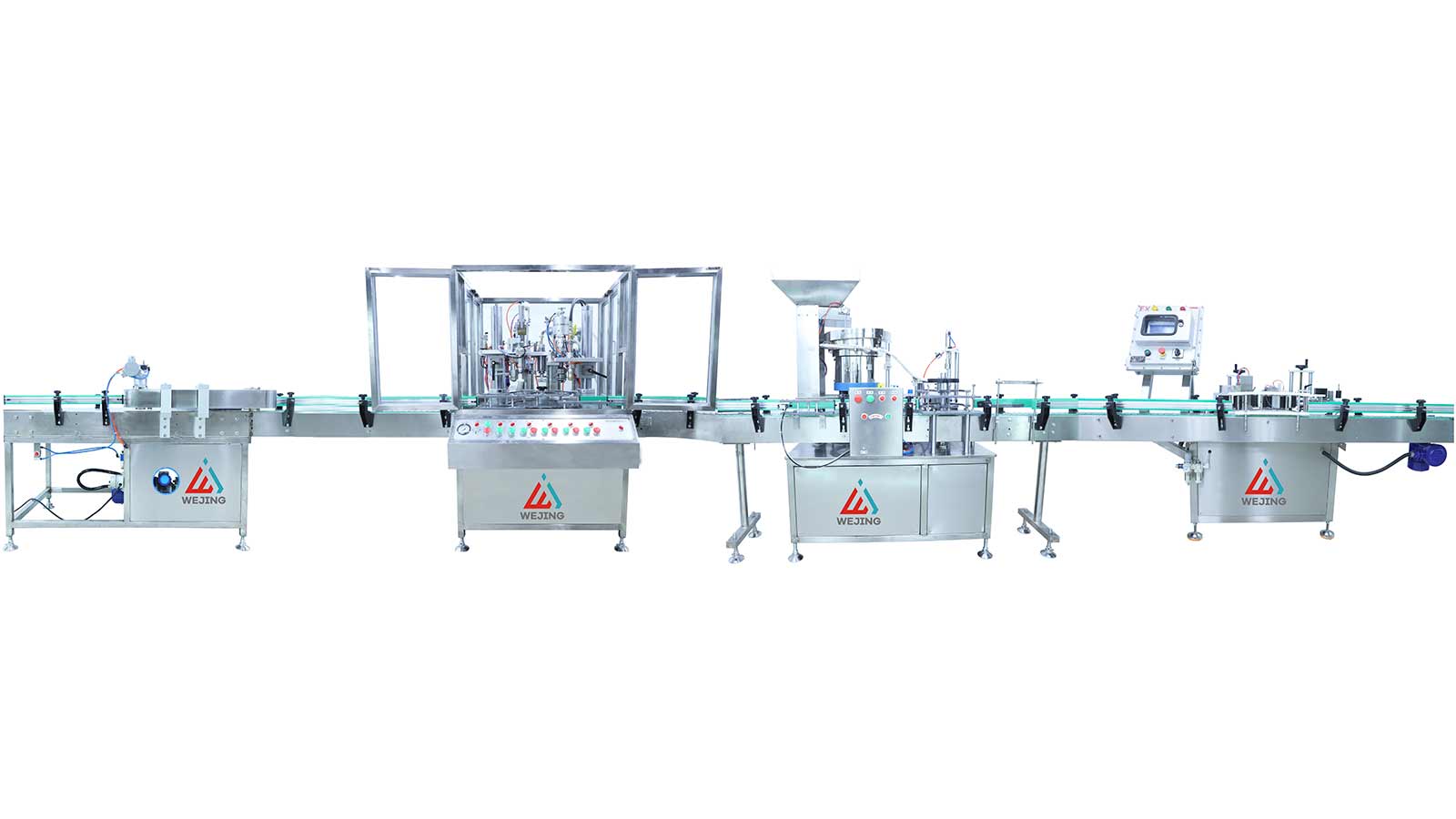
Aerosol spray products have become increasingly popular due to their convenience, efficiency, and wide range of applications in industries such as cosmetics, household cleaning, automotive care, and so on. Aerosol technology can be traced back to the early 20th century. After more than a century of development, it has become more mature. However, many people still don't know much about the principles and production process of aerosols.
This blog will comprehensively introduce the composition, formula design, production process and equipment of aerosol spray products to help readers deeply understand this modern technology.
What is an aerosol?
Definition of the aerosol
Aerosol is a colloidal dispersion system consisting of liquid or solid particles uniformly dispersed in a gaseous medium. According to the state of the dispersed phase, aerosols can be divided into two categories: liquid aerosols and solid aerosols. Liquid aerosol is the most common type, such as insecticides, deodorants, etc.; solid aerosol is mainly used in powder coatings, dry powder fire extinguishing agent and other fields.
Key features of aerosols
● Small particle size: The diameter of aerosol particles is usually between 0.1-100μm, which can be suspended in the air for a long time to form a stable colloid. The smaller the particles, the larger the surface area and the higher the reaction activity.
● Good dispersion: Aerosol particles are evenly dispersed in the gas medium and are not easy to aggregate or settle. This is due to the electrostatic charge on the surface of the particles and the role of surfactants, which can form a stable dispersion system.
● Controllable: through the adjustment of nozzles and valves, you can accurately control the spray volume of aerosol and the degree of atomization. Different nozzle designs can obtain different atomization effects, such as cone-shaped fog, fan-shaped fog.
The unique nature of the aerosol so that it has irreplaceable advantages in many areas. For example, aerosol pesticides can evenly cover the surface of crops, improve the efficacy of the drug; aerosol lubricants can penetrate into the crevices of mechanical parts, play a good lubrication; aerosol pharmaceutical products can be delivered directly to the respiratory tract, to achieve the local drug delivery.
Aerosol spray assembly
A complete aerosol spray product usually consists of four main parts: container, valve, nozzle and propellant. They cooperate with each other to realize the storage, injection and atomization functions of aerosol.
Container
The material selection and design of aerosol containers need to take into account mechanical strength, pressure resistance, corrosion resistance and other requirements. Common container materials include aluminum alloy, stainless steel, tin-plated steel plate, etc. Aluminum containers are light, have good heat dissipation, low cost, and are suitable for one-time use; steel containers are high in strength and can be repeatedly filled, suitable for industrial use.
The shapes and sizes of containers vary, such as cylindrical and elliptical, and the capacity ranges from a few milliliters to hundreds of milliliters. In order to improve the pressure resistance of the container, stretching, spinning and other processes are usually used to form spiral or wavy reinforcement ribs on the wall.
Valve
The valve is a key component for controlling the outlet of aerosol. It is firmly connected to the container through the pressing process and cooperates with the nozzle to control the injection of aerosol. The structure and material of the valve require precision to ensure sealing and service life.
Common aerosol valve types are:
● Continuous valve: the simplest and most commonly used valve type, which opens when the nozzle is pressed and closes when released, and the aerosol is continuously sprayed out.
● Metering valve: Each time the nozzle is pressed, only a predetermined amount of aerosol is released, which is suitable for occasions such as quantitative dosing. The metering valve realizes the metering function through the cooperation of the spring and the piston.
● Dustproof valve: A layer of film is provided on the valve to prevent foreign matter from entering and keep the contents clean. When using, pierce the film with the nozzle first, and then spray.
The valves produced by Weijing are made of high-quality stainless steel materials, with polished surface and excellent corrosion resistance. Precision processing technology ensures the sealing and opening and closing flexibility of the valve. We can provide a variety of valve types according to customer needs.
Nozzle and spray cover
The nozzle and spray cover are the outlet parts of the aerosol, and their design directly affects the atomization quality and spray direction. The nozzle is usually equipped with a spiral or annular flow channel, which uses the Venturi effect to accelerate the aerosol and achieve atomization at the outlet. The shape and size of the nozzle opening can adjust the particle size and distribution of the droplets.
The spray cap provides dust and damage protection for the nozzle and can guide the spray direction of the aerosol. Some special spray caps also have additional functions such as extending the spray rod and adjusting the spray angle to meet different usage requirements.
Weijing has advanced nozzle design and manufacturing technology, and can tailor various specifications of nozzles and spray caps according to product characteristics. Through CFD simulation and experimental optimization, our products can achieve efficient and uniform atomization effect.
Propellant
The propellant is the key component that provides the power to spray the aerosol. It exists in liquid or gaseous form in the container and is continuously vaporized during use to provide continuous pressure for the discharge of the contents.
Commonly used propellants can be divided into two categories:
liquefied gas: at room temperature in liquid form in the container, the use of gasification to provide pressure. Common liquefied gas propellants include propane, isobutane, carbon dioxide, etc.
compressed gas: at room temperature is a gas, need to be pressurized into the container before use. Common compressed gas propellants include nitrogen and compressed air.
The choice of propellant needs to consider the compatibility with the contents, the required pressure, atomization effect and other factors. In addition, the propellant must also meet the environmental protection, safety and other regulatory requirements, such as non-destruction of the ozone layer, non-toxic and harmless.
Weijjing's products use a new generation of environmentally friendly propellants, such as hydrofluoroolefin (HFO), which are superior to traditional hydrofluorocarbons (HFCs) in terms of performance, and are environmentally friendly, in line with the requirements of international conventions.
Aerosol production process
Aerosol production is a precise and orderly process involving container preparation, liquid filling, valve pressing, inflation and sealing, product testing and other links. Each link has strict operating procedures and quality requirements to ensure the consistency and safety of the product.
Container preparation
Aerosol containers need to be surface treated and cleaned before use to remove impurities such as oil and oxides, improve the adhesion of the coating and the corrosion resistance of the container. Common surface treatment methods are:
Degreasing: Use alkaline washing, solvent washing and other methods to remove grease, fingerprints and other pollutants on the surface of the container.
Rust removal: Use acid washing, sandblasting and other methods to remove rust, oxide scale and other rust on the surface of the container.
Chemical formation: Form a dense oxide film or phosphating film on the surface of the container to improve the adhesion and corrosion resistance of the coating.
The treated container needs to be cleaned in multiple stages with deionized water or pure water, and dried for standby use. Our company uses a fully automatic cleaning line, the process parameters can be precisely controlled, and the cleaning effect is stable and reliable.
Liquid filling
Filling the prepared aerosol liquid into the container is a key process. The accuracy and consistency of the filling amount directly affect the product quality. Common filling methods are:
Pressure filling: Use compressed gas (such as nitrogen) to press the liquid into the container, which is suitable for liquids with low viscosity.
Metering pump filling: Use metering pumps such as plunger pumps and gear pumps to discharge a fixed volume of liquid each time, which is suitable for liquids with high viscosity.
Weighing filling: Real-time weighing during the filling process, and control the filling amount based on weight feedback, which is suitable for mass production.
Wejing's fully automatic filling line uses a servo-driven metering pump with a filling accuracy of ±1% and an efficiency of up to 120 cans per minute. The filling process is carried out in a clean room to ensure that the liquid is not contaminated.
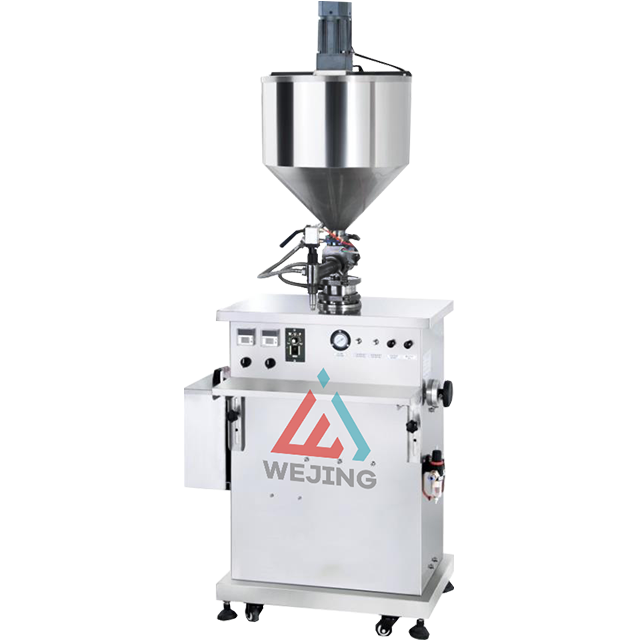
Automatic Filling Machine
Valve pressing and inflation
After filling, the valve assembly needs to be pressed onto the container and the propellant is filled into the container through the valve. Valve pressing is a precise mechanical process, which requires the coaxiality of the valve and the container mouth and uniform pressure distribution to ensure sealing performance.
The inflation process must control the filling amount and pressure of the propellant to meet the formula requirements. Avoid liquid reflux and gas oversaturation during inflation, otherwise it will affect product quality. After inflation, air tightness testing is also required to ensure no leakage risk.
Weijing uses imported high-speed capping machines and inflators to monitor the pressing force and inflation pressure of each container online to ensure the consistency and traceability of the production process.
Product testing
Aerosol products need to undergo strict quality inspection before leaving the factory to ensure their safety, effectiveness and stability.
The main inspection items include:
Appearance inspection: visually inspect the product's appearance defects such as printing, deformation, rust, etc., and use tools to measure whether the key dimensions are qualified.
Weighing test: weigh each aerosol online to determine whether the filling amount is within the specified tolerance range. Weighing usually uses a high-precision electronic scale, and the data is automatically recorded and analyzed.
Spray performance test: Sampling test of aerosol atomization fineness, spray angle, flow rate and other performance indicators, laser particle size analyzer, high-speed camera and other methods can be used.
Air tightness test: Use water immersion method, bubble method and other methods to check the sealing performance of aerosol to ensure that it will not leak during storage and use.
Internal pressure test: Use a pressure gauge to measure the change of internal pressure of aerosol at different temperatures to determine whether it meets safety requirements.
Active ingredient analysis: Use gas chromatography, high-performance liquid chromatography and other analytical methods to determine whether the content of active ingredients in aerosol meets the formula requirements.
Weijing has a professional quality inspection laboratory equipped with advanced testing instruments and equipment, which can conduct comprehensive physical and chemical performance tests on products. We have also established a complete quality management system, and implement multiple controls such as first inspection, patrol inspection, and random inspection on key processes to ensure that each batch of products meets standard requirements.
Packaging of final products
Qualified aerosol products need to be labeled, coded, boxed, boxed and other packaging processes for storage, transportation and sales. The selection of packaging materials should take into account the characteristics of the product and protection requirements, such as light, moisture, shock and so on.
Quality Control in Aerosol Production
As a pressure vessel, the quality and safety of aerosol products are directly related to the personal and property safety of consumers. Therefore, aerosol production must implement comprehensive and strict quality control, covering the entire production process from raw materials to finished products. The main measures for quality control include:
Supplier management: Qualification review and performance evaluation of suppliers of raw materials, auxiliary materials, packaging materials, etc. to ensure timely supply and stable quality.
Process control: Formulate operating procedures and control plans for key processes, implement multiple inspections such as self-inspection, mutual inspection, and special inspection, and timely discover and correct deviations.
Equipment management: Regularly calibrate and preventively maintain production equipment to ensure that its accuracy, stability and safety performance meet the requirements.
Personnel training: Conduct pre-job training and regular assessments for operators and inspectors in various positions to improve their quality awareness and operating skills.
Product release: Conduct production record review, data analysis, product sampling and other release inspections for each batch of products, and confirm that they meet quality standards before leaving the factory.
Customer Service: Establish a customer complaint handling and product recall mechanism, respond to customer feedback in a timely manner, and continuously improve product and service quality.
Conclusion
As the production equipment of aerosol products, aerosol filling equipment largely determines the quality and cost of the products. Choosing a professional and reliable aerosol equipment supplier is one of the key decisions of aerosol brand owners. Professional equipment suppliers can not only provide high-quality products, but also provide perfect technical support and after-sales service to help customers optimize production processes, improve product quality, and reduce operating costs, so as to stand out in the fierce market competition.
As a leading domestic aerosol equipment manufacturer, Wejing will continue to pursue excellence, be customer-oriented, continue to innovate, and contribute to the development of the aerosol industry. We look forward to working hand in hand with more partners to create a better future!
FAQs
Q: What is an aerosol?
A: An aerosol is a colloidal dispersion system consisting of liquid or solid particles uniformly dispersed in a gas medium. According to the state of the dispersed phase, aerosols can be divided into two categories: liquid aerosols and solid aerosols.
Q: What are the common types of aerosol valves?
A: Common aerosol valve types include continuous valves, metering valves, and dust-proof valves. Continuous valves are the simplest and most commonly used type; metering valves are suitable for quantitative dosing; dust-proof valves have a protective film on the valve to prevent foreign matter from entering.
Q: What are the main links in the aerosol production process?
A: The main links in aerosol production include container preparation, liquid filling, valve pressing and inflation, product testing, and finished product packaging. Among them, container preparation, liquid filling, and valve pressing and inflation are key processes that directly affect product quality.
Q: What are the quality control measures in aerosol production?
A: Quality control measures in aerosol production include supplier management, process control, equipment management, personnel training, product release and customer service. Through comprehensive and strict quality control, ensure product safety, effectiveness and stability.
Q: What types of aerosol propellants are there?
A: Aerosol propellants can be divided into two categories: liquefied gas and compressed gas. Liquefied gas exists in a liquid state in a container at room temperature, and uses gasification to provide pressure; compressed gas is a gas at room temperature and needs to be pressurized and filled into the container before use.


