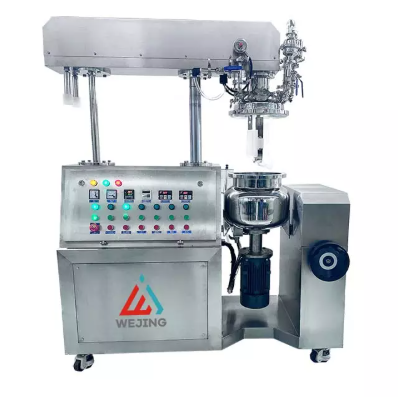
Understanding Emulsifying Mixers and Their Role
Emulsifying mixers are essential for industries like cosmetics, food, and pharmaceuticals. These machines combine immiscible liquids, such as oil and water, into stable emulsions. But does a faster emulsifying mixer really lead to better results?
In this article, we will explore how the speed of an emulsifying mixer affects the emulsification process. You will also learn how various factors contribute to achieving the best possible product quality.
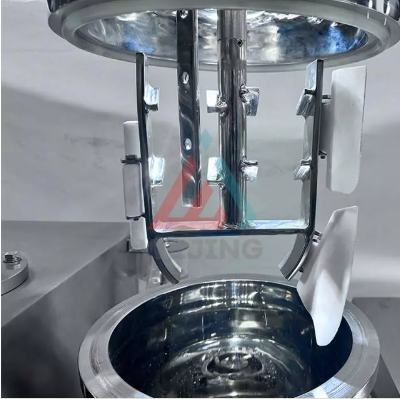
How Emulsifying Mixers Achieve Effective Emulsification
The Process of Emulsification and Its Importance
Emulsification is the process of combining two liquids that are normally immiscible, such as oil and water, to form a stable mixture. The key to successful emulsification is breaking the two phases into very fine droplets, which can then disperse evenly throughout the mixture. The process is widely used in many industries, including food, cosmetics, and pharmaceuticals.
The effectiveness of emulsification depends largely on the shear force applied during mixing. High shear forces break down larger droplets into smaller ones, creating a finer dispersion. The smaller the droplets, the more stable the emulsion will be. This is critical because larger droplets tend to coalesce over time, leading to the separation of the oil and water phases.
Emulsification is a vital process for product stability, as it enhances the uniformity of the final product. It ensures that the ingredients remain properly mixed, preventing issues such as phase separation or inconsistency in texture. The shear force, particle size, and uniformity of the mixture are the primary factors influencing the quality and stability of the emulsion.
The Mechanics of Emulsifying Mixers
Emulsifying mixers are typically composed of a rotor and stator. The rotor spins at high speeds, creating shear forces that break down the liquid into smaller particles. The stator, located adjacent to the rotor, helps maintain the flow of the mixture, ensuring that the liquid is evenly mixed. This rotor-stator system is designed to ensure maximum efficiency in the emulsification process.
The gap between the rotor and stator is an essential factor in determining the shear force applied to the material. A smaller gap generates more shear, resulting in finer emulsions. The rotational speed of the rotor also plays a crucial role in emulsification. A higher speed leads to increased shear force and better particle breakdown, which can result in a smoother, more stable product.
In high-speed emulsifying mixers, the rotor can reach very high rotational speeds, increasing the shear forces. This is especially useful in industrial applications, where large volumes of liquids need to be emulsified quickly and efficiently. The combination of rotor speed and gap size ultimately determines the efficiency and quality of the emulsification process.
How Mixing Speed Affects Emulsification Quality
The Benefits of Faster Mixing Speeds
Faster mixing speeds can significantly improve the quality of the emulsification process. When emulsifying mixers operate at higher speeds, the shear forces applied to the liquid increase, which helps break down the droplets into smaller sizes. Smaller droplets create a more stable emulsion, as they are less likely to coalesce and separate over time.
In many industries, faster mixing speeds also lead to increased production efficiency. The faster the emulsification process, the less time it takes to achieve the desired result. This can be a major advantage in high-demand production environments, such as those in the cosmetics and food industries, where time is a critical factor.
For example, in the cosmetics industry, where product consistency is crucial, faster emulsification helps achieve uniform textures in creams, lotions, and serums. Faster speeds ensure that the product has a smooth and consistent feel, which is essential for consumer satisfaction. In food production, faster emulsification can improve the consistency of products like mayonnaise and salad dressings, ensuring that they remain stable and uniform for an extended period.
Challenges with Very High Mixing Speeds
Although faster mixing speeds can offer many benefits, they also come with certain challenges. One of the most significant issues with high speeds is that they can reduce the flow rate of the mixture. As the shear force increases, the resistance to flow also increases, leading to slower movement of the material through the mixer. This can reduce the overall efficiency of the process, especially when working with large volumes of material.
Another issue with high mixing speeds is the increase in temperature. Shearing forces generate heat, and when the speed is too high, the temperature can rise significantly. This can be problematic for materials that are sensitive to heat, as excessive temperature increases can degrade the quality of the mixture or cause ingredients to break down.
Additionally, very high mixing speeds can lead to material accumulation in the mixer. The rapid movement of particles can cause clumping or the formation of lumps, which can affect the quality and consistency of the emulsion. This can lead to inefficiencies in the mixing process and require more time and energy to correct.
Comparing Emulsification Speeds Across Different Mixer Models
Small-Scale vs. Industrial Emulsifying Mixers
Emulsifying mixers are available in a wide range of sizes, from small laboratory models to large industrial machines. The speed of these mixers can vary significantly, depending on the application and the desired outcomes.
Laboratory emulsifiers, typically used for small-scale research or production, operate at higher speeds. These machines are designed to achieve quick results with smaller volumes of material, making them ideal for testing and development purposes. In many cases, laboratory emulsifiers have a smaller capacity (e.g., 10L) and are capable of reaching very high speeds to achieve precise emulsification in a short time.
On the other hand, industrial emulsifying mixers, which can handle larger volumes (e.g., 500L), tend to operate at lower speeds. While they may require more time to emulsify large batches, they are optimized for efficiency in large-scale production settings. Lower speeds are used in industrial emulsifiers to prevent issues like material accumulation and overheating, which are more likely to occur with faster speeds.
| Feature | Small-Scale Emulsifiers | Industrial Emulsifiers |
| Capacity | Up to 10L | 500L and above |
| Speed Range | High (up to 10,000 rpm) | Moderate (1,500 rpm to 3,000 rpm) |
| Primary Applications | Research, testing, small batch production | Large scale production (cosmetics, food) |
| Efficiency | Quick emulsification for small batches | Optimized for large volumes, slower speeds |
| Typical Industries | Cosmetics, Pharmaceuticals | Food, Cosmetics, Pharmaceuticals |
Why Vacuum Emulsifying Mixers Are Effective
Vacuum emulsifying mixers are highly effective because they operate under a vacuum environment. This helps remove air bubbles from the mixture during the emulsification process. Air bubbles can destabilize emulsions, causing the product to separate or lose its uniformity. By eliminating air, vacuum emulsifiers ensure that the final product remains smooth and stable.
Vacuum emulsifiers also benefit from the ability to operate at higher speeds without causing the same level of instability as traditional mixers. This makes them particularly useful in industries such as cosmetics and food, where the stability and texture of the final product are critical.
In addition to reducing air bubbles, vacuum emulsifying mixers can be optimized for faster speeds, improving both production efficiency and the quality of the emulsion. Their ability to handle higher speeds while maintaining stability makes them a preferred choice for producing high-quality emulsions in large volumes.
Factors Influencing Emulsification Beyond Speed
Impact of Blade Design and Rotor-Stator Distance
Beyond mixing speed, several factors influence the effectiveness of an emulsifying mixer. The design of the mixing blades is one of the most important. The sharper and more durable the blades, the better they can apply shear force to break down larger particles. Blade design impacts the efficiency of the emulsification process and the final product's quality.
The rotor-stator gap also plays a significant role in emulsification. A smaller gap increases the shear force applied to the material, helping to create finer emulsions. The rotor-stator gap is critical when working with materials that require fine dispersion and uniform mixing.
Tip: When choosing an emulsifying mixer, consider the blade design and rotor-stator gap to optimize particle size reduction and emulsification quality.
The Role of Temperature and Emulsification Time
Temperature and emulsification time also play a significant role in determining the final quality of the emulsion. Temperature can influence the viscosity of the materials being emulsified. In some cases, higher temperatures make it easier to mix materials by reducing their viscosity. However, excessive heat can damage heat-sensitive ingredients, affecting the quality of the mixture and the final product.
Emulsification time is another crucial factor. While faster speeds can shorten the emulsification process, certain materials may require longer mixing times to achieve the desired consistency. Finding the right balance between speed, time, and temperature is essential to maintaining product quality.
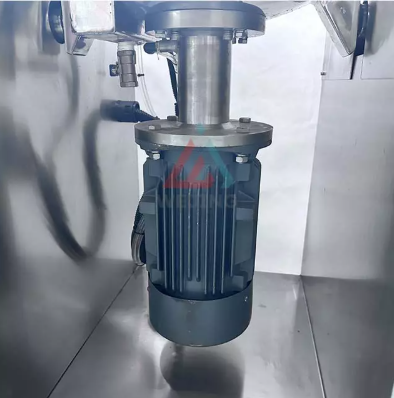
When Faster Emulsification Is Beneficial and When It’s Not
Applications That Benefit from Faster Speeds
Faster emulsification speeds are particularly beneficial in high-production environments where efficiency is critical. For example, in the cosmetics industry, faster emulsification ensures that large batches of cream or lotion are produced quickly without sacrificing texture or consistency. In food production, faster emulsification can enhance the uniformity of products like mayonnaise, ensuring that they remain stable and smooth.
Limitations of Faster Emulsifying Mixers
While faster speeds can improve emulsification efficiency, they are not always the best choice. In some cases, excessive speed can cause overheating or material accumulation, which may negatively impact product quality. For certain materials, slower speeds are preferable, as they allow for better control over the process and reduce the risk of instability.
Tip: Always evaluate the specific requirements of your application to determine whether a faster emulsifying mixer will provide the desired results without causing any negative side effects.
Conclusion: Optimizing Emulsification Speed for Better Results
Faster emulsifying mixers can enhance emulsification speed and quality. However, they must be used carefully. Achieving the best results involves balancing speed with other factors like temperature, rotor-stator distance, and blade design.
Understanding the benefits and challenges of faster speeds helps manufacturers make informed decisions. Whether in cosmetics, food production, or pharmaceuticals, choosing the right emulsifier is essential for creating high-quality, stable emulsions.
Guangzhou Wejing Intelligent Equipment Co., Ltd. offers advanced emulsifying mixers that deliver high efficiency and product stability. Their products ensure top-notch emulsification results for various industries.
FAQ
Q: Does a faster emulsifying mixer improve the emulsification process?
A: A faster emulsifying mixer can enhance emulsification by increasing shear forces. However, it must be balanced with other factors like temperature and rotor-stator gap to avoid negative effects such as material overheating.
Q: What is an emulsifying mixer used for?
A: An emulsifying mixer is used to mix two immiscible liquids, like oil and water, into a stable emulsion. It is commonly used in cosmetics, food, and pharmaceutical industries for creating uniform products like creams, sauces, and medications.
Q: Can a faster emulsifying mixer increase production efficiency?
A: Yes, faster emulsifying mixers can reduce emulsification time, increasing production efficiency. However, care must be taken to ensure that quality is not compromised by excessive speed.
Q: What are the advantages of using a vacuum emulsifying mixer?
A: Vacuum emulsifying mixers are beneficial because they remove air bubbles during the mixing process, ensuring more stable and smooth emulsions, especially for heat-sensitive materials.
Q: How does the speed of an emulsifying mixer affect the final product?
A: Higher speeds increase shear forces, resulting in smaller particle sizes and more stable emulsions. However, speeds that are too high can cause flow issues and higher temperatures, which may degrade the product.
Q: How do I choose the right emulsifying mixer for my needs?
A: When choosing an emulsifying mixer, consider factors like the desired production volume, material type, and required mixing speed. Different applications may require different speeds and capacities to achieve the best results.


