You face a big choice: growing your production or starting a new aerosol product line. The filling equipment you pick can become a major hurdle. Deciding between a manual and an automatic aerosol filling machine is a large investment. It affects your production speed, labor costs, and ability to grow. This article gives a clear, fact-based filling machine comparison. You will see how each type fits your production size, budget, and future plans. We will explain each machine type and compare key working numbers. This guide helps you pick the right option for your business. Manual machines offer flexibility, while automatic ones provide speed. Knowing these trade-offs helps you spend your money well. Your choice shapes what comes next for your operations.
Key Takeaways
Manual machines cost $1,500 to $5,000. They are very flexible for making small batches.
Automatic machines cost between $50,000 and $200,000. They work fast and give the same results every time.
How many cans you make each month helps you decide. Manual machines work best for fewer than 5,000 cans per month.
Automatic machines can fill more than 100,000 cans each month. Semi-automatic machines handle the middle amount of cans.
Manual machines need one worker at each station. Automatic machines run with just one or two operators.
Manual filling is accurate about 92 percent of the time. Automatic filling is accurate about 99.2 percent of the time.
Automatic machines cut down on waste and labor costs. At high volume, they pay for themselves in 18 to 24 months.
Defining the Aerosol Filling Machine Options
Both manual and automatic filling machines do the same main job: they fill aerosol cans with product and propellant. But they serve very different production needs. Your choice between these filling technologies affects your daily work, your staffing needs, and your growth path. Knowing what each system offers helps you match the equipment to your real production size.
Manual Systems: Flexibility and Low Entry Cost
Manual aerosol filling machines put control right in your hands. These systems fit startups, small-batch makers, and businesses that often change product formulas. You run each step yourself, from placing the can to starting the fill. This hands-on method gives you great flexibility when you need it most.
Core Components and Operation
A manual system has a few key parts: a product filling head, a crimping station, and a propellant charging unit. You place each can by hand and start each station with your hand or a foot pedal. The equipment runs on shop air, not complex electronics. This simple design means you can train a new worker in hours, not weeks. The upfront cost matches this basic setup.
Machine Type | Upfront Cost Range |
Manual | $1,500 – $5,000 |
Fully Automatic | $50,000 – $200,000+ |
Manual filling machines cost about 10 to 100 times less than automatic lines. Several factors explain this lower entry cost:
They are simple, hand-run systems with no complex automation parts.
They are portable and need no permanent setup or heavy infrastructure.
They are easy to run, so no special, costly training or programming is needed.
Automated systems have high startup costs because of built-in electronics, conveyors, and control systems.
Typical Production Workflow
Your workflow with a manual machine moves step by step. First, you put an empty can on the filling station. You press the product fill valve, then move the can to the crimping head to seal the valve. Finally, you add the propellant and release the finished can. This process takes about 30 to 60 seconds per can, based on your skill. For a small batch of 100 cans, you might spend an hour or two of focused work. Manual systems work best when you need to make varied orders without long changeover times.
Automatic Systems: Speed and Consistency
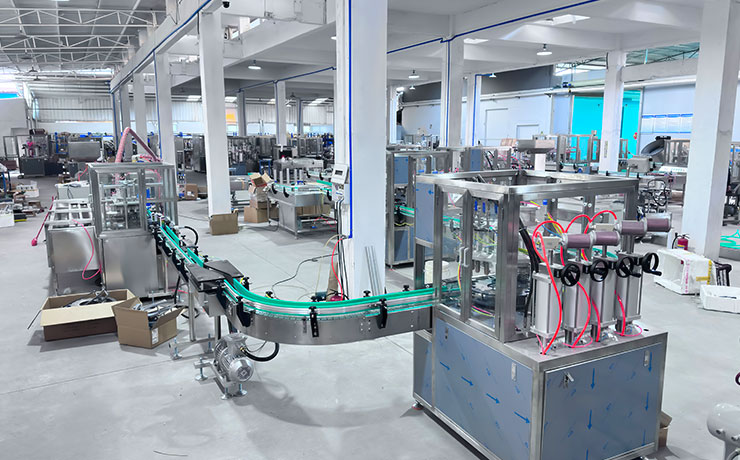
Automatic filling machines run as full production lines. They handle every stage—can feeding, product filling, crimping, propellant charging, and even check-weighing—without constant operator input. These systems excel at high-volume manufacturing where consistency and speed drive your profits.
Core Components and Operation
An automatic filling system connects multiple stations along a conveyor. Sensors track each can as it moves through the line. Programmable logic controllers coordinate every action with exact timing. You usually need only 1-2 operators to watch the whole line, checking gauges and fixing any jams. The equipment does the repetitive work with mechanical consistency that human hands cannot match.
Line Type | Throughput (cans per hour) | Throughput (cans per minute) |
Standard automatic aerosol filling line | 2,400–3,600 | 40–60 |
Fully automatic BOV filling line | 1,500–3,200 | 25–53.33 |
Customized high-speed line | Up to 12,000 | Up to 200 |
A standard automatic aerosol filling machine makes 40 to 60 cans per minute. Customized high-speed lines reach up to 200 cans per minute. Compare that to manual output of about 2 to 5 cans per minute. The difference changes your production capacity overnight.
Typical Production Workflow
Your automatic filling machine runs nonstop once you set the parameters. Empty cans enter from a bulk hopper. The conveyor moves them through each station automatically. Sensors check proper filling and reject bad cans. Finished products exit at the far end, ready for packaging. Your operators focus on quality checks and equipment monitoring, not repetitive physical tasks. This workflow suits stable, high-volume products where you run the same formula for long periods.
Wejing Intelligent Equipment offers both manual and automatic filling machines. With over 10 years of experience, the company helps clients pick the right automated bottle filling approach for their needs. Whether you start with a manual unit or invest directly in an automatic filling machine, matching the equipment to your production volume protects your capital and supports steady growth.
Key Differences Between Manual and Automatic Filling Machines
Knowing how manual and automatic filling machines differ helps you pick the right one for your production needs. These differences affect everything you do, from how many cans you make each day to how much profit you earn over time. The table below shows the main points to think about when choosing your aerosol filling machine.
Parameter | Manual | Semi-Automatic | Automatic |
Throughput | 2–5 cans/min | 10–30 cans/min | 18,000+ cans/hr |
Labor | Every step by hand | 1 operator for loading | 1–2 operators total |
Investment | Lowest | Moderate | Highest |
Best for | Under 5,000 cans/month | 5,000–50,000 cans/month | Above 100,000 cans/month |
Flexibility | Fully adaptable | Fast changeover | Best for stable SKUs |
Production Speed and Throughput
Speed is the biggest difference between these machines. A manual aerosol filling machine makes about 2 to 5 cans each minute. This pace works well for labs, test batches, or special orders that do not need many cans. You handle every step yourself, which gives you control but limits how much you can produce.
An automatic filling system works very differently. High-speed lines can make more than 18,000 cans in one hour. That means hundreds of cans every minute without stopping. Your workers watch the line instead of filling each can by hand. This speed gives you an edge over competitors when demand goes up.
A semi-automatic filling system sits in the middle. It makes 10 to 30 cans per minute, or 600 to 1,800 cans each hour. This option helps growing businesses that need more speed than manual machines offer. You load and unload cans while the machine handles filling and gassing on its own.
Your monthly output tells you which speed level you need. Manual machines work best when you make fewer than 5,000 cans per month. Semi-automatic systems handle 5,000 to 50,000 cans monthly. Automatic filling machines become worth the cost above 100,000 cans per month. Pick equipment that matches your real order size so you do not pay for speed you cannot use.
Initial Investment and Operational Costs
The cost difference between manual and automatic systems shows a clear trade-off. Manual filling machines have the lowest starting price. A tabletop unit costs much less than automated equipment. This low cost makes manual systems appealing for startups testing new products.
Automatic filling machines need the biggest investment. You pay for conveyors, sensors, controllers, and precise dispensing parts. This investment brings high production speed that lowers your cost per can over time. The point where semi-automatic and automatic systems become equal in cost usually falls between 80,000 and 150,000 cans per month.
Labor costs also change the money picture. Manual filling machines need one worker for every step. Those labor costs grow quickly as production increases. Automatic systems need only 1 to 2 workers for the whole line. Fewer workers means you spend much less on labor.
Semi-automatic filling machines give you a balanced choice. They cost less than full automation while cutting down on manual work. You can add automation parts later, like auto infeed or vision inspection. This upgrade path protects your first investment as your business grows.
Filling Accuracy and Consistency
Accuracy and consistency affect product quality and customer happiness. Manual filling systems reach about 92% fill accuracy. That means roughly 8% of your cans may have the wrong fill amount. Worker tiredness, different techniques, and rushing all cause these mistakes.
Automated bottle filling systems reach 99.2% accuracy. Servo-controlled dispensing systems keep fill levels within ±0.5%. Some advanced systems stay even tighter at ±0.25ml consistency. This precision makes sure every can meets your standards.
Fill weight accuracy shows the same pattern. Manual systems usually vary by ±2-3% from the target weight. Automated systems hold fill weight accuracy within ±0.1%. That difference matters for following rules and keeping customer trust.
Manual filling systems depend on who is doing the work. Consistency changes based on the worker and the time of day. A fresh worker in the morning may fill differently than the same person after four hours of repetitive work. Automated systems remove this human factor completely. They give you the same quality across every batch and every production run.
This accuracy gap affects your profits. Overfilled cans waste product and reduce your earnings. Underfilled cans lead to customer complaints and possible fines. An automatic filling machine pays for itself through less waste and steady quality.
Decision framework from field logic: Launching a new product line or entering aerosol production? Start with semi-automatic—it keeps you agile and cost-light. Running one or two high-volume SKUs daily? You'll likely need automatic systems to stay competitive on unit cost. Need flexibility for small batch or contract jobs? Semi-automatic gives you speed during changeovers and less waste. Want to reduce headcount or increase consistency? Automatic systems are built exactly for that. Economic note: If you're consistently pushing volume, semi-automatic might actually cost you more in the long run via labor, slower throughput, and downtime.
The main differences between manual and automatic filling machines come down to your production goals. Manual filling machines give you flexibility and low starting costs. Automatic filling machines provide high-speed production and better accuracy. Semi-automatic filling systems connect these two worlds for medium-volume producers. Your choice affects your production speed, labor needs, and product quality for many years.
Pros and Cons of Each Machine Type
Advantages of Manual Aerosol Filling Machines
Manual aerosol filling machines have the lowest starting price. You can enter the aerosol market without spending a lot of money upfront. Manual or semi-automatic systems reach their break-even point below 500,000 units per year. This means you start making a profit sooner when you produce smaller batches. You avoid the heavy cost of expensive automation. The table below shows how lower upfront costs change your break-even math.
Factor | Manual / Semi-automatic | Automatic |
Upfront cost | Significantly lower | Higher |
Break-even threshold | Below 500,000 units / year | Above 500,000 units / year |
Labor cost (600,000 units) | $22,000 / year (2 operators) | $5,500 / year (1 operator) |
Reject cost (600,000 units) | $15,300 / year (3% reject rate) | <$5,100 / year (<1% reject rate) |
Annual savings from automation at 600,000 units | — | ~$25,000 |
Manual filling machines also give you great flexibility. You can switch between different products quickly. Custom orders become easy to handle because you adjust the process by hand. Maintenance stays simple since the equipment uses basic mechanical parts. You do not need special technical skills to keep the machine running.
Disadvantages of Manual Systems
Manual systems have clear speed limits. You fill only a few cans per minute. Large orders take many hours of repetitive work. This low output becomes a problem when demand grows. Your production capacity stays low compared to automated lines.
Labor costs add up over time. At 600,000 units per year, you need two operators. Their combined labor cost reaches $22,000 annually. You also face a reject rate of about 3%. Waste from overfilled or underfilled cans costs another $15,300 per year. Human error lowers fill accuracy and consistency. Even skilled workers vary their output during long shifts. This inconsistency hurts product quality and can lead to customer complaints. As you scale up, these costs grow faster than your revenue.
Advantages of Automatic Filling Machines
Automatic filling machines solve the speed problem. They achieve throughput over 18,000 cans per hour. This high output cuts your per-unit fixed costs. You finish large orders in a fraction of the time. Only 1-2 operators run the entire line, reducing labor costs dramatically. At 600,000 units, automation saves you about $25,000 each year compared to manual filling. The key benefits of automatic filling machines include:
High throughput of over 18,000 cans per hour reduces per-unit fixed costs.
Only 1-2 operators required per line lowers labor costs.
Excellent consistency minimizes human error and waste.
Advanced features like servo-controlled fillers improve efficiency further.
Automated bottle filling delivers precise fill volumes every time. Reject rates stay below 1%, saving you over $10,000 in waste compared to manual systems. This consistency builds customer trust and protects your brand. For medium production volumes, the advantages of semi-automatic filling machines offer a balanced middle ground. You gain some automation speed without full capital outlay. However, for high-volume SKUs, automatic systems remain the most competitive choice on unit cost.
The right machine depends on your production scale. Low volumes suit manual or semi-automatic systems for their flexibility and lower investment. High volumes demand automatic systems for efficiency and low per-unit cost. Wejing Intelligent Equipment provides solutions across the entire spectrum, helping you choose as you grow.
How to Choose the Right Machine for Your Business
Assessing Your Production Volume Needs
Start by figuring out how many cans you fill each day. Look at your average daily output. Then think about what you expect in the next 12 to 24 months. This basic math helps you see which machine type fits your needs.
The production volume guidelines for aerosol filling equipment give you clear markers. Manual filling machines work well when you produce fewer than 1,000 cans each day. This range suits startups, research labs, and custom job shops. You handle each can by hand, so your output stays low but your flexibility remains high.
A semi-automatic filling machine bridges the gap for daily production between 1,000 and 20,000 cans. This option gives you mechanical filling power without full automation costs. You load cans and start the cycle, while the machine handles the precise filling work. Many growing businesses find this sweet spot perfect for their needs.
Fully automatic filling machines become the justified choice when your daily production exceeds 20,000 cans. At this volume, manual methods create bottlenecks that cost you money. An automatic filling machine runs continuously, eliminating the manual pace limits that slow your line. Your operators watch the system rather than push each can through the process.
Consider your growth trajectory too. If you expect to cross that 20,000-can threshold within two years, buying an automatic system now may save you from purchasing twice. If your demand stays steady and small, a manual or semi-automatic filling machine protects your capital. Match your equipment to your realistic projections, not your optimistic dreams.
Evaluating Your Budget and ROI
Your budget extends beyond the purchase price. You must consider the total cost of ownership. This framework includes your initial capital investment, ongoing operating costs, and routine maintenance expenses. Each machine type carries a different cost profile across these categories.
Manual filling machines have the lowest starting price. You pay less upfront, but your labor costs run high. Multiple operators handle each step of the filling process. Material waste also increases with manual systems due to inconsistent pressure and spillage. These costs add up quickly as your production volume grows.
Fully automatic filling machines require a larger initial investment. However, they reduce your operating costs significantly. One operator can manage the entire line, cutting your labor expenses dramatically. Precision dosing limits overfilling and spills, reducing material waste. Enclosed gassing stations minimize operator exposure to volatile compounds, improving workplace safety.
The payback period for automated aerosol fillers typically spans 18 to 24 months. Consider this real-world example: plants averaging 50,000 units per day achieve break-even in 20 months. Your payback timeline depends on your production volume and your current labor costs. Higher automation levels lead to quicker returns due to reduced downtime, fewer errors, and faster production speeds.
Your ROI calculation should factor in potential savings and increased efficiency. Filling systems range from a few thousand dollars for a simple manual filler to several hundred thousand dollars for a fully automated system. Compare these options using the total cost of ownership, not just the sticker price. Include installation, ongoing maintenance, operational costs, and potential upgrades in your analysis. In some cases, purchasing used equipment or renting short-term may prove more cost-effective than buying new.
Aligning with Operational Goals
Your machine choice must support your long-term business strategy. Think about your product mix and your plans for market expansion. These factors shape your decision-making criteria.
If you frequently change products or handle custom orders, manual filling machines offer unmatched flexibility. You can switch between different aerosol formulas quickly without complex changeovers. This adaptability serves businesses that thrive on variety and small-batch production.
If you produce stable, high-volume products, automatic filling machines deliver the efficiency you need. These systems excel at running the same formula for extended periods. Your changeovers happen less often, so the automation investment pays off through continuous operation. Production increasingly focuses on scalability and customization to meet varied consumer preferences. Automatic machines gain traction for their efficiency. Your machine choice must balance automation for scale with flexibility for product variety to achieve long-term growth.
Consider your workforce capabilities as well. Automation reduces manual intervention, allowing skilled workers to move to higher-value tasks such as quality control, machine supervision, and process optimization. This reallocation raises the overall skill level of your team. Reputable suppliers provide comprehensive training for both operation and routine maintenance. Your personnel can safely run automatic lines even without specialized backgrounds initially.
Wejing Intelligent Equipment provides customized production line design and after-sales support. The company helps clients scale from manual to automatic systems as they grow. With over 10 years of experience, Wejing understands the challenges of each production stage. Their team works with you to design a solution that matches your current needs while accommodating future expansion.
Your decision between manual and automatic filling machines ultimately reflects your business goals. Calculate your production volume honestly. Evaluate your complete budget picture. Align your equipment choice with your operational strategy. These steps guide you toward the right investment for your unique situation.
Your choice depends on your production reality. Manual filling machines offer low entry cost. Manual filling machines suit startups testing small aerosol batches. An automated bottle filling system delivers speed and accuracy. This automated method pays off at high volumes. Large-scale operations need automatic equipment to maximize efficiency. Use the framework above to score your needs. Choose a semi-automatic filling machine for a middle ground between manual and full automation. This option handles manual changeovers without high automation costs. Product quality stays consistent. Trends favor automated technology for compliance and waste reduction. One automatic line fills 40 to 60 cans per minute versus 2 to 5 cans by hand. Filling accuracy improves dramatically with automation. Manufacturers report a 20% productivity gain. Contact Wejing Intelligent Equipment for a consultation or quote.
FAQ
How do I know if I need a manual or automatic filling machine?
First, figure out how many cans you make each month. Manual filling machines work best when you make fewer than 5,000 cans monthly. Automatic systems start to make sense when you produce over 100,000 cans. A semi-automatic filling machine fits between these two ranges. Pick equipment that matches your real order size, not your hoped-for growth.
What is the actual cost difference between manual and automatic systems?
Manual systems cost between $1,500 and $5,000 to start. Fully automatic lines run from $50,000 to $200,000 or more. Your labor costs also differ a lot. Automatic lines need only 1-2 workers. Manual systems need one worker at each station, which raises your ongoing costs.
Can I upgrade from a manual to an automatic system later?
Yes, you can grow step by step. Many companies start with manual equipment and add automation as demand rises. Semi-automatic options give you a middle choice. You can also add automatic parts like conveyors or check-weighers to your current lines. This gradual method protects your first investment.
How does filling accuracy compare between machine types?
Manual systems reach about 92% fill accuracy. Automatic filling machines hit 99.2% accuracy with servo-controlled dispensing. Fill weight varies by ±2-3% with manual systems versus ±0.1% with automation. Better accuracy cuts product waste and keeps your cans within legal limits.
What maintenance do these filling machines require?
Manual systems use simple mechanical parts. You can fix them with regular tools and little training. Automatic systems need special technical skills for sensors, controllers, and pneumatic parts. Plan regular check-ups for both types. Your supplier should give training and manuals for proper care.
How many operators do I need for each machine type?
Manual filling machines need one worker per station. A normal setup uses two to three workers for filling, crimping, and gassing. Automatic systems run with just 1-2 workers watching the whole line. This lower labor need creates big savings at high production volumes.
What safety considerations apply to aerosol filling equipment?
Aerosol propellants are flammable and under pressure. Manual systems expose workers to propellant during each fill cycle. Automatic systems use closed gassing stations that limit exposure. Both machine types need proper airflow and grounding. Follow your local safety rules and your equipment supplier's advice.
How long does it take to train workers on each system?
Manual filling machines need little training. New workers learn the basic steps within hours. Automatic systems need more detailed instruction. Workers must understand control panels, sensor readings, and basic problem-solving. Plan for several days of training with automatic equipment, plus ongoing skill building.