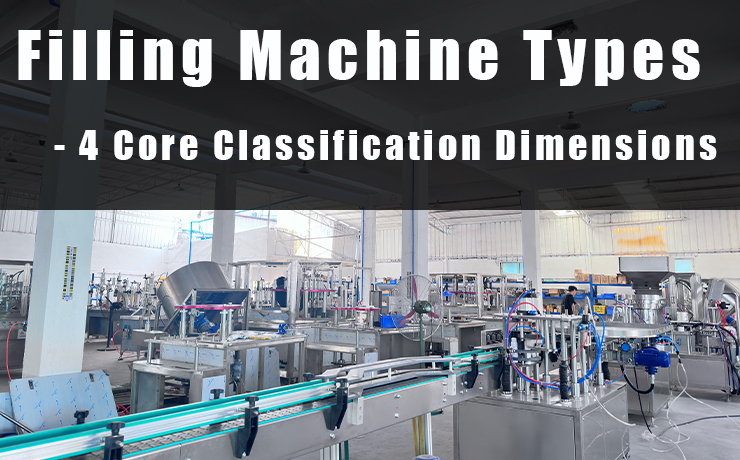
As a professional filling machine supplier, we’ve structured the key classification methods of filling machines to help enterprises select the right equipment based on production scenarios, material characteristics, and automation needs:
1. By Filling Principle
Atmospheric Pressure Filling Machine: Fills liquids under normal pressure, suitable for low-viscosity, gas-free products (e.g., purified water, edible oil, daily chemical toner) with simple structure and low cost.
Pressure Filling Machine: Uses mechanical pressure to transfer materials, designed for high-viscosity substances (e.g., tomato sauce, toothpaste, ointment, balm) to avoid clogging.
Vacuum Filling Machine: Evacuates containers first before filling, ideal for low-viscosity liquids (e.g., syrup, pesticides, chemical reagents, vitamin drinks) to reduce oxidation.
Isobaric Filling Machine: Balances pressure between container and liquid tank before filling, suitable for carbonated products (e.g., beer, soda, sparkling water) to retain CO₂.
2. By Material Form
Liquid Filling Machine: Adapts to various liquids (from low-viscosity water to high-viscosity essential oil), widely used in daily chemical, food, pharmaceutical, and oil industries.
Paste Filling Machine: For cream, gel-like materials (e.g., facial cream, hand cream, minced meat, broad bean paste), ensuring sealed filling and quantitative accuracy.
Aerosol Filling Machine: Special pressure equipment with propellant filling (e.g., spray paint, insecticide, setting spray), process: liquid filling → sealing → gas filling.
Powder Filling Machine: Fills powder and small granular materials (e.g., milk powder, washing powder, pesticide powder, condiments) with dust-proof design for chemical and food industries.
Granule Filling Machine: Suitable for granular materials (e.g., coffee powder, seeds, sugar, granular medicine), supporting small-bag packaging or bulk filling.
3. By Container Movement
Rotary Filling Machine: Containers rotate with the turntable, continuously completing filling → capping, high efficiency (ideal for mass production in food and beverage industries).
Linear Filling Machine: Containers move linearly, filling in rows intermittently, simple structure and easy maintenance but limited capacity, suitable for small-batch gas-free liquid filling.
4. By Automation Level
Manual Filling: Fully manual operation, no equipment dependency, only for small-batch, gas-free liquids (e.g., laboratory samples, small handmade workshops).
Semi-Automatic Filling Machine: Automatic filling with manual bottle loading/unloading, balancing cost and efficiency, suitable for trial production or small-batch production in SMEs.
Automatic Filling Machine: Includes single-machine automation and production line integration, supporting fully automated processes (filling → sealing → labeling → inspection) for large-scale production in medium and large enterprises.
For customized filling machine solutions based on specific industries (e.g., pharmaceutical, food, daily chemical) or material characteristics, feel free to consult for exclusive selection advice.


