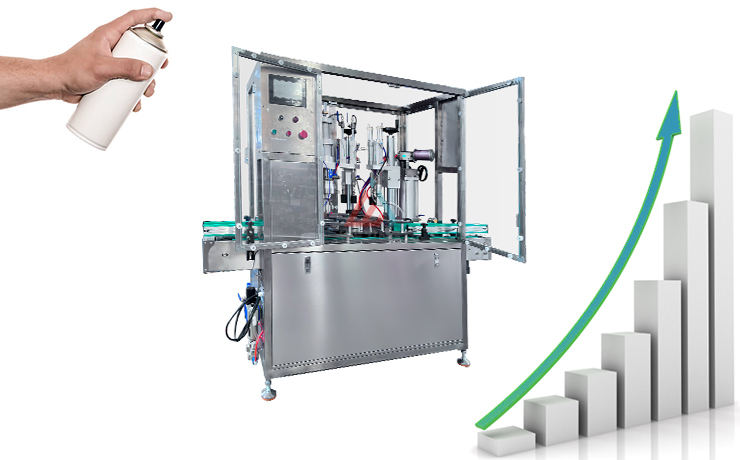
The global chemical aerosol market is expanding rapidly. Industry reports project a robust 4.6% compound annual growth rate. This surge pressures manufacturers to scale output rapidly. They must do so without compromising strict safety or margin requirements. Manual and legacy filling methods create massive operational bottlenecks. These older processes drive up labor costs significantly. They also produce unacceptable material waste margins due to imprecise dosing.
Upgrading to a modern aerosol filling machine transforms chemical packaging completely. It transitions your production floor from a high-risk operational bottleneck into a predictable commercial advantage. You will discover how automated equipment optimizes daily throughput and eliminates human error. We will explore how precision dosing minimizes costly chemical waste. You will also learn the critical safety components necessary for industrial compliance.
Key Takeaways
Scale & Margins: Automated filling creates a "commercial flywheel" where higher throughput directly lowers unit costs, enabling competitive pricing.
Precision is Profit: Servo-controlled systems reduce costly chemical waste and ensure stringent dosage accuracy.
Compliance & Safety: Industrial-grade machines mitigate inherent chemical risks through EU ATEX-compliant explosion-proof components and real-time pressure monitoring.
Lifecycle Management: Proper predictive maintenance and calibration can reduce material waste by up to 20% and extend equipment lifespan.
The Business Case: Resolving the Chemical Manufacturing Bottleneck
Industrial cleaners, lubricants, and automotive sprays see surging global demand. Manufacturers struggle when using semi-manual processes. Factory floors rely heavily on manual workers to load cans and monitor valves. This dependency limits your production ceilings. Human operators suffer from fatigue during long shifts. This fatigue leads to inconsistent pacing and inevitable output dips. Modern facilities require continuous, high-speed operation. Resolving this conflict demands robust automated solutions. Automation removes the human variable from repetitive packaging tasks. It allows your workforce to focus on quality control and line supervision.
An aerosol can filling machine stabilizes daily production. It dilutes fixed operational costs across a larger volume. This creates incredible pricing leverage in competitive chemical markets. Lower unit costs mean you can offer competitive pricing to distributors. Higher demand naturally follows these aggressive price points. Increased sales volumes generate more capital. You can then reinvest this capital into further facility expansions. We call this the commercial flywheel effect. It turns standard machinery into an aggressive growth engine for your entire enterprise.
Material loss is a solvable technical inefficiency. It is not just a standard operating cost you must accept. Legacy machines frequently overfill containers. Overfilling wastes expensive chemical formulations and valuable propellants. Underfilling damages brand reputation and invites regulatory fines. Precise machinery treats waste reduction as a direct return on investment. Every drop of saved chemical compound goes straight to your bottom line. Strict volumetric control ensures every single can meets exact specifications.
Core Capabilities to Evaluate in an Aerosol Filling Machine
Evaluating the 100–200 cans per minute range reveals a "medium capacity" sweet spot. Contract manufacturers strongly favor this exact tier. It balances raw production speed with rapid changeover capabilities. Tool-less adjustments accommodate different can formats quickly. Massive high-speed lines struggle with frequent product changes. Slower machines fail to meet peak seasonal demands. A balanced output rate keeps inventory moving without overwhelming your downstream case packers.
Capacity Tier | Cans Per Minute (CPM) | Best Suited For | Changeover Speed |
Low Capacity | 30 - 90 | Startups, Specialty niche runs | Very Fast |
Medium Capacity | 100 - 200 | Contract Manufacturers, Growing brands | Fast |
High Capacity | 200+ | Global enterprises, Single-product lines | Slow |
Legacy volume-based systems lack strict accuracy. Piston-filler setups struggle when handling highly viscous materials like greases or adhesives. Modern systems utilize advanced servo-controlled metering instead. Servo motors offer pinpoint control over the entire dispensing stroke. They handle high-viscosity or sensitive chemicals easily. Accuracy means higher profit retention over long production runs. A reliable aerosol filling machine pays for itself simply by eliminating over-dispensing errors.
Leak-proof crimping prevents volatile chemical degradation. Over 50% of the market prioritizes this exact feature during equipment selection. Poor crimps lead to dangerous gas leaks during transit. A compromised seal ruins the entire product lifecycle. Industrial crimping heads lock the valve securely onto the container. They use calibrated expanding collets to ensure uniform pressure around the rim. This precise mechanical seal guarantees long-term shelf stability.
Chemical packaging uses various propellant types. Systems must handle traditional compressed gases safely. They also need to support emerging eco-friendly propellants. Consumer demand shifts heavily toward sustainable aerosol solutions. Retrofitting older machines for new gases proves incredibly expensive. Versatile equipment accommodates liquefied petroleum gas, nitrogen, and compressed air natively. This flexibility future-proofs your initial capital investment against changing environmental regulations.
Safety, Security, and Compliance: Non-Negotiable Criteria
Chemical propellants remain highly flammable and inherently hazardous. Explosion-proof engineering is absolutely mandatory. Facilities must adhere strictly to EU ATEX standards. Intrinsically safe wiring prevents stray electrical sparks. Pneumatic controls keep potential ignition sources away from gas zones. Manufacturers isolate high-risk propellant injection stations within dedicated blast enclosures. These structural safety measures protect your workforce and your facility from catastrophic accidents.
Modern lines integrate robust automated environmental safeguards. Vacuum extraction removes lingering fumes around the filling heads. Localized ventilation protects operators from inhaling toxic chemical vapors. Equipment features built-in auto-shutoff protocols. These protocols trigger instantly during micro-leaks or sudden pressure drops. Sensors monitor ambient gas concentrations continuously. The system halts the entire line immediately if combustible levels rise beyond safe thresholds.
Quality assurance integration happens directly on the production line. Inline weight checking guarantees exact product dosage for every unit. Automated load cells reject overfilled or underfilled cans instantly. Water-bath testing detects microscopic leaks by submerging pressurized cans in warm water. Many facilities now adopt modern alternative leak detection methods. Ultrasonic sensors and gas sniffers provide dry, fast leak checks. These rigorous QA systems protect your brand credibility. They prevent hazardous product recalls and consumer safety incidents.
Semi-Automatic vs. Fully Automatic: A Decision Framework
Evaluate your current production volumes carefully. Project future shifts in your market demand. Semi-automatic models suit smaller runs and pilot testing. Fully automatic systems handle massive daily quotas easily. A fully automatic aerosol can filling machine requires minimal human intervention. You simply load empty cans and bulk chemical supplies. The equipment handles the rest of the intricate packaging cycle.
Moving beyond initial capital expenditures reveals stark financial realities. Semi-automatic setups carry high ongoing labor expenses. You also pay heavily for scrap and inconsistent yields. Fully automated systems require a much higher upfront investment. However, they achieve a rapid break-even point through sheer volume efficiency. They slash daily payroll burdens drastically. They practically eliminate material waste. We recommend calculating these ongoing scrap expenses carefully to justify the upgrade.
Assess your available factory floor space next. Consider how existing conveyors will integrate into the new setup. Maximize your layout for optimal workflow and safe material handling.
Hands-Free Zones: Establish designated areas where workers remain clear of moving parts.
Ventilation Routing: Ensure ductwork can easily connect to the propellant injection stations.
Staging Areas: Allocate enough square footage for raw material pallets and finished goods.
Maintenance Access: Leave adequate clearance around the machine panels for technicians.
Implementation Realities: Rollout Risks and Maintenance
Roughly 30% of machine failures stem from improper maintenance protocols. The true cost of downtime far exceeds the price of spare parts. Idle lines bleed money every single minute. Missed shipping deadlines damage client relationships permanently. Consistent upkeep prevents catastrophic halts during peak production seasons. An unmaintained aerosol filling machine degrades in performance rapidly. Seals crack, nozzles clog, and pumps lose their calibrated pressure.
Establish strict lubrication schedules for all moving components. Perform routine pressure calibrations on the propellant pumps. This proactive approach maintains yield consistency. It prevents the gradual drift of fill accuracy over time. Predictive maintenance uses sensors to track vibration and heat. Technicians replace worn seals before they actually fail. Proper calibration reduces material waste by up to 20 percent. It extends the overall lifespan of the equipment significantly.
Transition your workforce from manual laborers to skilled operators. Modern machines require technical intelligence rather than sheer physical brawn. Proper onboarding prevents costly operator errors.
Safety Training: Educate staff on ATEX compliance and emergency shutdown procedures.
Software Navigation: Train operators to use touch-screen interfaces and diagnose fault codes.
Changeover Drills: Practice swapping nozzles and guide rails to minimize line downtime.
Lean Integration: Teach Just-In-Time (JIT) principles to keep raw materials flowing smoothly.
Safety management becomes proactive rather than reactive. Empower your team to halt production if they spot mechanical anomalies.
Conclusion
Automated aerosol packaging bridges a critical gap. It connects rising chemical market demand with harsh factory-floor realities. High speeds and precision dosing drive long-term operational success. Modern automated systems eliminate the human bottleneck entirely. They transform a dangerous, messy process into a streamlined commercial asset. Your facility becomes a predictable, highly profitable operation capable of massive scale.
Use strict shortlisting logic during vendor selection. Prioritize manufacturers offering transparent Overall Equipment Effectiveness data. Look for platforms offering modular upgrade paths for future expansion. Demand robust after-sales compliance support and training programs. A vendor must act as a true engineering partner. They should understand the specific volatile nature of your chemical products.
Encourage your engineering team to take action now. Conduct a customized break-even analysis based on target throughput. Evaluate your specific chemical viscosities before upgrading your floor. Calculate how much material waste costs you annually. You will likely find the automated investment justifies itself quickly. Upgrade your packaging infrastructure to dominate your specific market niche.
FAQ
Q: What is the standard ROI timeline for a fully automatic aerosol filling machine?
A: A fully automatic system typically achieves ROI within 12 to 24 months. This variable payback period depends heavily on labor replacement savings and significant waste reduction. High-volume chemical manufacturers break even faster by eliminating costly overfilling and reducing their daily reliance on manual operators.
Q: Can one machine handle multiple chemical viscosities and can sizes?
A: Yes. Modern equipment features modular nozzles and tool-less changeovers. These design elements allow rapid transitions between different can diameters and heights. Advanced servo-controlled pumps handle varying chemical viscosities seamlessly. Cleaning-in-place (CIP) systems ensure cross-contamination does not occur between different product batches.
Q: What are the primary safety standards an aerosol can filling machine must meet?
A: An aerosol can filling machine must meet rigorous global safety protocols. EU ATEX certification is mandatory for explosion-proof environments. Equipment must adhere to ISO standards for manufacturing quality. Localized pressure vessel regulations also dictate how systems handle and inject highly volatile compressed gas propellants.


