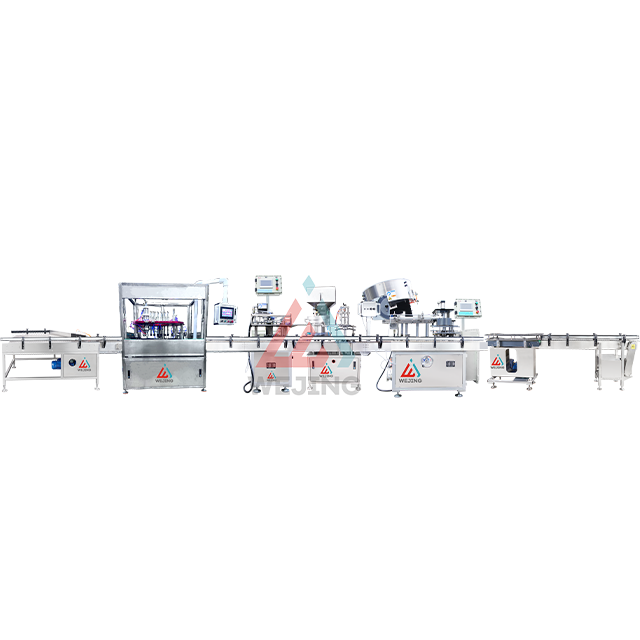
This guide applies to the maintenance and care of BOV aerosol filling machines. The equipment employs a pneumatic-electric integrated principle, achieving automated filling through a PLC microcomputer control system. It consists of a dual-component sealing and gas-charging unit, liquid filling machine, metering cylinder, controller, frame, and pneumatic components. Proper maintenance ensures stable equipment performance, extends service life, and reduces failure rates.
1. Basic Maintenance Principles
l Adhere to the principle of “prevention first, repair secondary”
l Strictly enforce regular inspection schedules
l Use only specified grades of lubricants and spare parts
l Disconnect power and air supply before maintenance
l Operations must be performed by qualified technicians
2. Daily Maintenance (Per Shift)
(1) Pre-Operation Checks
l Inspect all equipment fasteners for looseness
l Confirm conveyor belts and chains are properly tensioned
l Check filling valves and dual-chamber packaging systems for foreign objects
l Verify air supply pressure remains stable within set range (typically 0.6-0.8MPa)
l Confirm lubricant fluid levels are adequate
(2) Operational Monitoring
l Listen for abnormal noises during operation; immediately stop and inspect if detected
l Observe for unusual vibrations
l Monitor motor and bearing temperatures for normalcy
l Check smooth operation of all pneumatic components
l Verify filling accuracy meets requirements
(3) Post-Operation Cleaning
l Clean residual material from filling valves and sealing heads
l Remove debris from work surfaces and machine frames
l Inspect conveyor belts for cleanliness and absence of foreign objects
l Maintain tidy surroundings around equipment
3. Periodic Maintenance (Monthly)
(1) Mechanical Component Inspection and Maintenance
Motors and Bearings
Check motor operating current for normalcy
Inspect bearing wear; apply specified grade lubricant
Clean motor cooling components
Drive System
Inspect conveyor belt wear and tension
Check chain wear; adjust or replace as needed
Clean and lubricate drive components
Filling System
Inspect filling valve seals for integrity
Calibrate filling metering cylinder accuracy
Clean liquid filling lines
(2) Pneumatic System Maintenance
Cylinder Inspection
Manually operate to verify smooth movement
Inspect piston rods for scratches or bending
Test for air leaks (using soapy water)
Solenoid Valve Maintenance
Manually force operation to verify functionality
Check solenoid coils for burnout (resistance test)
Clean valve cores to prevent clogging
Air Circuit Inspection
Check air hose connections for leaks
Clean air treatment triad (filter, pressure reducer, lubricator)
Verify speed control valve operates stably
(3) Electrical System Inspection
l PLC Control System
l Check status of input/output signal indicators
l Clean controller ventilation ports to ensure adequate airflow
l Back up equipment parameter settings
l Wiring and Component Inspection
l Inspect for damaged switching components
l Verify absence of short circuits or open circuits
l Test operational status of all sensors
l Display and Control Panel
l Clean touchscreen/display surface
l Check button responsiveness
(4) BOV System Specific Inspection
Inspect wear condition of sealing head
Calibrate encapsulation pressure parameters
Clean encapsulation area to ensure no material residue
Test encapsulation seal integrity
4. Quarterly/Annual Maintenance
Comprehensive Lubrication: Thoroughly lubricate all lubrication points
Accuracy Calibration: Recalibrate filling volume and pressure control systems
Air Tightness Test: Conduct comprehensive inspection of pneumatic system seals
Electrical Safety Inspection: Check grounding resistance and insulation resistance
Wear Part Replacement: Replace seals and consumables based on usage
5. Common Troubleshooting
Fault Symptoms | Possible Causes | Troubleshooting Procedures |
Inaccurate filling volume | Dosing cylinder malfunction, incorrect parameter settings | Recalibrate and inspect seals |
Poor sealing | Insufficient sealing pressure, worn sealing head | Adjust pressure parameters and replace sealing head |
Abnormal equipment vibration | Loose fasteners, damaged bearings | Tighten loose components and replace bearings |
Pneumatic components fail to activate | Solenoid valve failure, insufficient air pressure | Inspect solenoid valves and adjust air pressure |
PLC alarm | Sensor malfunction, parameters out of range | Check sensors and adjust process parameters |
6. Safety Precautions
l Shut down equipment completely and disconnect power/air supply before maintenance
l Never perform maintenance while equipment is running
l Use appropriate tools to avoid damaging components
l Replace parts with OEM or equivalent specifications
l Conduct test runs after maintenance; resume production only after normal operation is confirmed
7. Documentation and Tracking
Establish comprehensive maintenance records including:
Daily inspection logs
Periodic maintenance checklists
Fault repair records
Spare part replacement logs
Accuracy calibration records
Conclusion
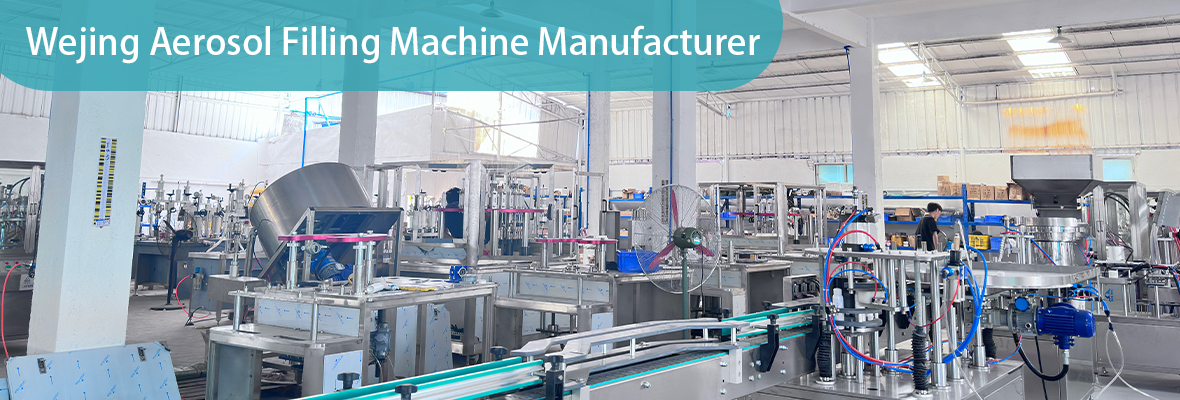
Standardized maintenance is crucial for ensuring stable operation and extending the service life of bov aerosol filling machines. With its high performance and comprehensive support services, combined with a scientific maintenance plan, WejingEquipment will ensure your production line operates continuously and efficiently. For complex malfunctions or technical support, promptly contact the equipment supplier or professional maintenance personnel.